SproutSmart
SproutSmart Intelligent Garden Sowing

Petunia

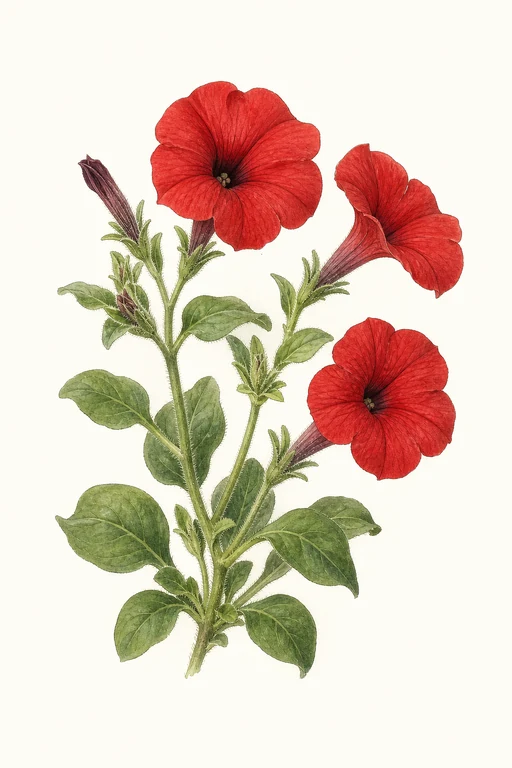
Botanical illustration of Petunia
🌱 70d to harvest Spreading

Velvety, trumpet-shaped blooms spill in a cascading ribbon, opening to a velour-like glow that feels almost luminous against the …

Planting Schedule

Add Petunia to your garden to build a schedule and get reminders.

Crop Dates

MilestoneDate
Start IndoorsJan 12th
Last FrostMar 23rd
Transplant / Sow OutdoorsMar 9th
Harvest BeginsMay 18th
Harvest EndsNov 12th

Crop Details

TraitValue
Days to Maturity70
Sun RequirementsFull SunFull sun
Growth HabitSpreading
Support NeededNone
Planting DepthSurface
Germination Temp (°F)70
Min Soil Temp (°F)50
Min Night Temp (°F)50
Harden Off (days)7

Frequently Asked Questions


What pest or disease most commonly affects Petunia (Petunia × atkinsiana), and how can I treat it?
Petunias (Solanaceae) are especially prone to powdery mildew and botrytis in humid, crowded plantings. Improve airflow by spacing plants and removing affected leaves, then spray with a labeled fungicide for powdery mildew/botrytis and water at the soil line rather than overhead. If you see gray mold/botrytis, remove the worst blooms and discard them to prevent spread.
How often should I water Petunia during active growth, and what soil moisture level should I aim for?
During the main growth phase (after plants are established and actively blooming), water when the top 1 inch of soil feels dry, then water thoroughly until excess drains. Petunias do best with consistently moist (not soggy) soil—wet soil can trigger root problems and botrytis. In hot weather or containers, this may mean daily checks, because the surface can dry quickly.
How do I know when Petunia is ready to harvest?
Petunia is typically harvested as flowers rather than a mature “crop” at 70 days; start harvesting when individual blooms are fully colored and open. For best continued blooming, deadhead spent flowers daily or every few days by pinching/cutting just above the next healthy set of leaves. Stop harvesting/maintaining deadheads only when you’re ready for the plants to decline, since regular deadheading keeps new buds forming.
Botanical illustration of Petunia

Velvety, trumpet-shaped blooms spill in a cascading ribbon, opening to a velour-like glow that feels almost luminous against the foliage. Petunia ‘Petunia’ (trailing/spreading) delivers a long, showy season of color with a soft, slightly ruffled texture and a dependable, ground-hugging habit that makes every bed and container look lavish. Ideal for bedding displays and hanging baskets where its trailing drape can be admired at every angle.

Sowing Tips

Transplant Conditions

Wait until soil reaches 50°F and nights stay above 50°F before moving outdoors. Harden off for 7 days first.

Expert Note

Start petunia seeds indoors early under warmth/light, then transplant only after nights are reliably warm to avoid chilling injury.