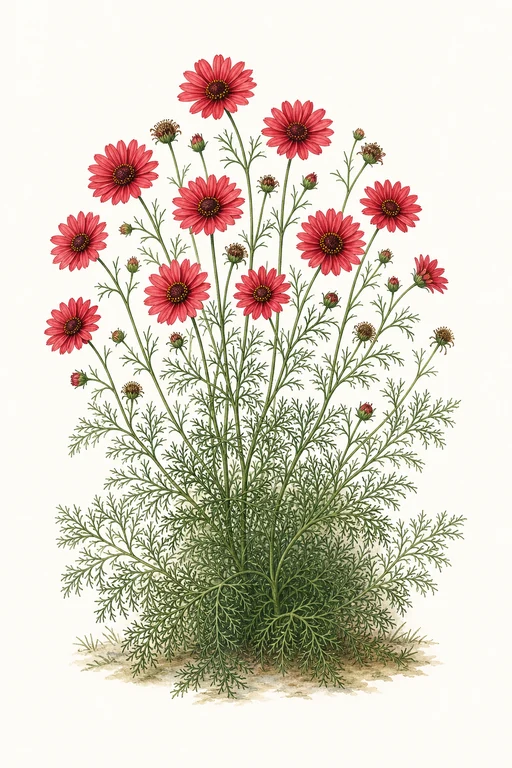
Sonata
60d to harvest
Feathery, fernlike foliage frames a profusion of daisy-like blooms that open with a luminous, silk-satin glow—Sonata’s petals catch the light in a way that feels almost musical. Expect sturdy, well-branched stems and long-lasting flowers with crisp, clean color and a satisfying, airy texture that holds its shape beautifully. Grow Sonata for standout cut-flower bouquets and for a garden display that stays bright from early bloom through the season’s peak.
Crop Dates
| Milestone | Date |
|---|---|
| Start Indoors | Mar 2nd |
| Last Frost | Mar 23rd |
| Transplant / Sow Outdoors | Mar 23rd |
| Harvest Begins | May 22nd |
| Harvest Ends | Nov 12th |
Crop Details
| Trait | Value |
|---|---|
| Days to Maturity | 60 |
| Sun Requirements | Full Sun |
| Growth Habit | Upright |
| Support Needed | None |
| Planting Depth | Surface |
| Germination Temp (°F) | 70 |
| Min Soil Temp (°F) | 50 |
| Min Night Temp (°F) | 45 |
| Harden Off (days) | 5 |
Recommended Companions
Frequently Asked Questions
What pest or disease most commonly affects Cosmos bipinnatus, and how can I stop it?
Cosmos bipinnatus commonly suffers from powdery mildew in warm, humid weather and dense plantings. Improve airflow by spacing plants and watering at the soil line, then remove any heavily affected leaves early. If mildew starts spreading, spray with a potassium bicarbonate or horticultural oil product and repeat as the label directs until new growth stays clean.
How do I tell when Cosmos bipinnatus (Sonata) is ready to harvest for cut flowers or seed?
For cut flowers, harvest when the ray florets (the “petals”) are fully open and the center disk is still fresh, ideally in the morning. For seed, leave heads on the plant until the flower bracts dry and the seeds look mature and dark; cut the heads and finish drying indoors if they feel still slightly tacky. Cosmos reaches maturity in about 60 days, but harvest timing still depends on when the first strong blooms formed.