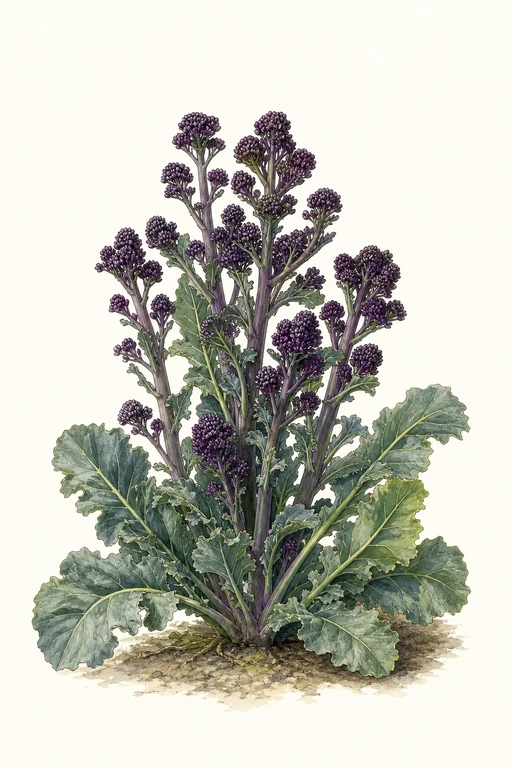
Summer Purple
🌱 70d to harvest
Rosette
Velvety, deep purple sprouting crowns rise with a jewel-like glow, tender yet richly flavored—an unmistakable sweetness that ling…
Crop Dates
| Milestone | Date |
|---|---|
| Start Indoors | Feb 23rd |
| Last Frost | Mar 23rd |
| Transplant / Sow Outdoors | Mar 16th |
| Harvest Begins | May 25th |
| Harvest Ends | Nov 12th |
Crop Details
| Trait | Value |
|---|---|
| Days to Maturity | 70 |
| Sun Requirements | Full Sun |
| Growth Habit | Rosette |
| Support Needed | None |
| Planting Depth | Normal |
| Germination Temp (°F) | 45 |
| Min Soil Temp (°F) | 40 |
| Min Night Temp (°F) | 32 |
| Harden Off (days) | 5 |
Recommended Companions
Frequently Asked Questions
What pest or disease is most likely on Brassica oleracea var. italica (purple sprouting broccoli) and how can I control it?
Watch for cabbage white caterpillars and aphids, which can chew leaves and leave sticky residue on tender shoots. Hand-pick caterpillars early, spray affected plants with insecticidal soap for aphids, and exclude butterflies with fine mesh netting from transplanting until harvest. If you see yellowing and a sudden wilting, suspect clubroot (a disease of Brassicas) and remove affected plants—avoid replanting brassicas in that soil for several years.
How often should I water purple sprouting broccoli during the main growth phase?
During the 8–10 week main growth period before harvest, keep the soil consistently moist but not waterlogged—aim for about 1 inch (2.5 cm) of water per week, split into 2–3 waterings in hot spells. Check by digging 2–3 inches down; water again when that depth feels dry, especially after cutting or harvesting new shoots. Mulch helps steady moisture and reduces stress that can slow shoot formation.
How do I know when Brassica oleracea var. italica (summer purple sprouting) is ready to harvest?
Harvest when the purple shoots are firm and about 4–6 inches (10–15 cm) long with tight, compact tops; this is typically around 70 days from sowing/transplanting depending on conditions. Start cutting from the lowest, thicker shoots first, using a sharp knife to take the shoot with a short stem, and you’ll often get additional shoots for a period afterward. Stop harvest before the buds open into visible yellow flowers, since that turns the shoots tough and bitter.