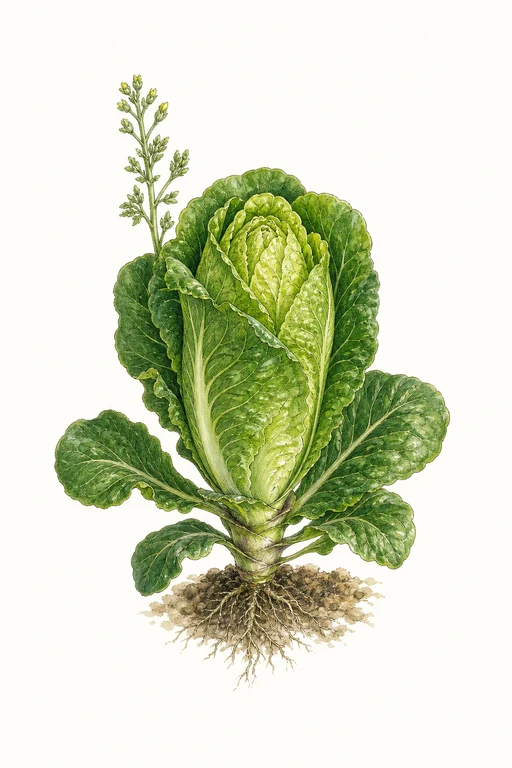
Little Gem
Lettuce
🌱 55d to harvest
Rosette
Crisp as a fresh snowfall, Little Gem forms tight, upright heads with a jewel-bright green heart and a tender, buttery bite. The …
Crop Dates
| Milestone | Date |
|---|---|
| Start Indoors | Feb 6th |
| Last Frost | Mar 6th |
| Transplant / Sow Outdoors | Mar 6th |
| Harvest Begins | Apr 30th |
| Harvest Ends | Nov 26th |
Crop Details
| Trait | Value |
|---|---|
| Days to Maturity | 55 |
| Sun Requirements | Part Sun |
| Growth Habit | Rosette |
| Support Needed | None |
| Planting Depth | Normal |
| Germination Temp (°F) | 70 |
| Min Soil Temp (°F) | 40 |
| Min Night Temp (°F) | 35 |
| Harden Off (days) | 6 |
Recommended Companions
Frequently Asked Questions
What pest or disease most commonly affects Lactuca sativa (Little Gem), and how can I manage it?
A common problem is lettuce aphids, which cluster on tender new leaves and leave sticky honeydew that can lead to sooty mold. Rinse plants with a strong spray of water to knock aphids off, then apply insecticidal soap directly on the undersides every 4–7 days as needed. If you see gray-white down on leaves or sudden collapse in cool, damp weather, improve airflow and avoid overhead watering to reduce downy mildew risk.
How often should I water Little Gem lettuce during the main growing phase?
During the 45–55 day growing period, keep the soil consistently evenly moist—about 1 inch of water per week total, split into 2–3 waterings if it’s hot or windy. Aim for damp (not soggy) soil at root depth; water when the top 1 inch of soil starts to dry to prevent bitterness and tipburn. Use morning watering so leaves dry quickly, since staying wet overnight encourages lettuce diseases.
How do I know when Little Gem is ready to harvest?
Harvest when heads are firm, tight, and reach roughly the stated size for the variety (often around 5–7 inches across) and the outside leaves feel crisp rather than flexible. Count forward to about 55 days from sowing/transplanting and check head firmness—lettuce that’s loose or still forming won’t keep quality as well. Cut at the base in the morning for the best texture, and don’t wait for overmaturity because heat-triggered bolting can ruin flavor.