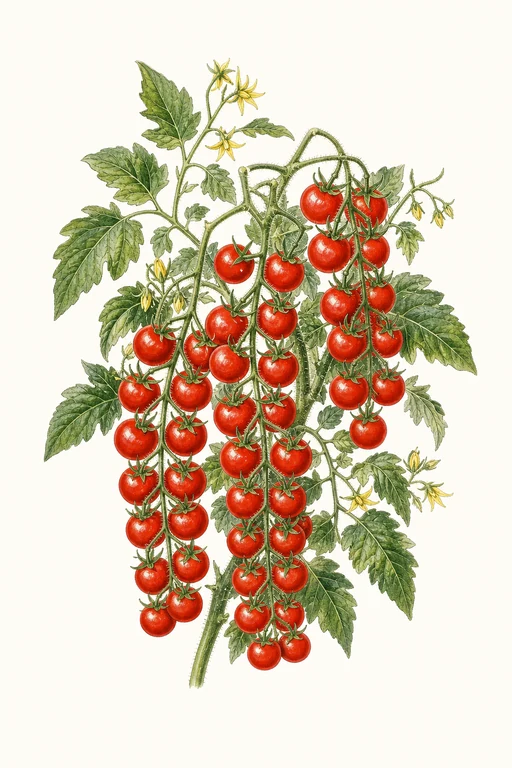
Sweet 100
Tomato
🌱 60d to harvest
Indeterminate
Sun-warmed sweetness bursts from Sweet 100’s abundant clusters of petite fruits—bright, glossy scarlet spheres that taste like su…
Crop Dates
| Milestone | Date |
|---|---|
| Start Indoors | Jan 16th |
| Last Frost | Mar 6th |
| Transplant / Sow Outdoors | May 1st |
| Harvest Begins | Jun 30th |
| Harvest Ends | Nov 26th |
Crop Details
| Trait | Value |
|---|---|
| Days to Maturity | 60 |
| Sun Requirements | Full Sun |
| Growth Habit | Indeterminate |
| Support Needed | Stake |
| Planting Depth | Deep |
| Germination Temp (°F) | 70 |
| Min Soil Temp (°F) | 60 |
| Min Night Temp (°F) | 50 |
| Harden Off (days) | 9 |
Recommended Companions
Frequently Asked Questions
What pests or diseases commonly hit Solanum lycopersicum (Sweet 100) and how can I control them at home?
Watch closely for tomato hornworms and aphids; check the undersides of leaves weekly and remove hornworms by hand, then spray aphids with a strong jet of water. For disease, manage early blight (brown spots with yellow margins) by removing infected lower leaves and watering at the soil line instead of wetting foliage. If blight keeps spreading, use an appropriate labeled fungicide for tomatoes and rotate products to avoid resistance.
How often should I water Sweet 100 tomatoes during the main fruiting phase?
During active flowering and fruiting, keep soil evenly moist with about 1–1.5 inches (2.5–4 cm) of water per week, split into 2–3 sessions if the weather is hot. Aim for steady moisture—irregular watering can trigger blossom-end rot and fruit cracking—so the top few inches dry slightly between waterings but the root zone doesn’t dry out. Mulch around the plants to stabilize moisture and reduce swings.
How do I know when Sweet 100 tomatoes are ready to harvest?
Pick when fruits are fully colored (bright red) and slightly firm, with no green shoulders near the stem. Sweet 100 is usually ready around 60 days after sowing/transplanting depending on conditions, and it will produce in clusters, so harvest often to keep plants setting more fruit. If you can gently twist a tomato and it releases from the truss without tearing, it’s at peak ripeness.