
French Breakfast 3
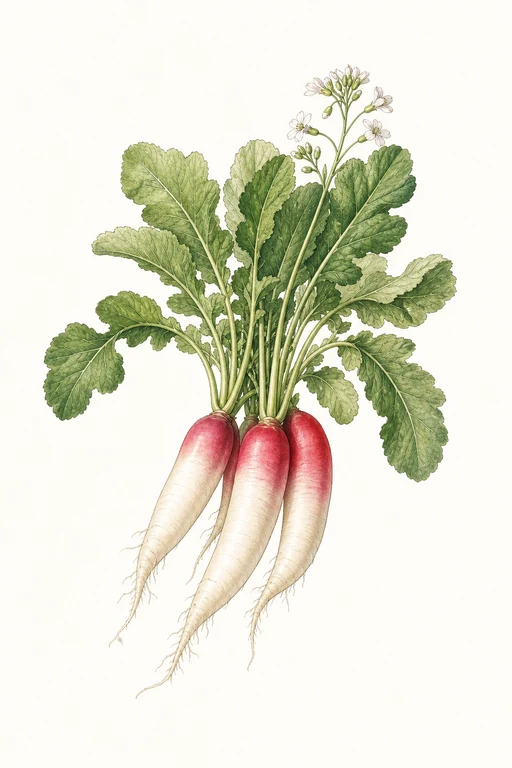
Crisp as fresh-cut glass, French Breakfast 3 radishes burst with a bright, peppery snap and a clean, sweet finish. Their classic half-long shape shows a vivid white base blushed with rosy-red shoulders, delivering tender, juicy flesh that stays pleasantly crisp at harvest. Ideal for fresh market-style bunches—perfect for slicing into salads, topping sandwiches, and adding zing to spring platters, or for quick pickling to keep their lively bite on hand.
Sowing Tips

Transplant Conditions
Wait until soil reaches 40°F and nights stay above 32°F before moving outdoors.
Expert Note

Direct-sow radishes in evenly moist soil and avoid letting them dry out to prevent pithiness and over-maturity.
Crop Dates
| Milestone | Date |
|---|---|
| Start Indoors | Direct Sow |
| Last Frost | Feb 9th |
| Transplant / Sow Outdoors | Feb 9th |
| Harvest Begins | Mar 6th |
| Harvest Ends | Dec 9th |
Crop Details
| Trait | Value |
|---|---|
| Days to Maturity | 25 |
| Sun Requirements | Full Sun |
| Growth Habit | Taproot |
| Support Needed | None |
| Planting Depth | Normal |
| Germination Temp (°F) | 55 |
| Min Soil Temp (°F) | 40 |
| Min Night Temp (°F) | 32 |
| Harden Off (days) | Not Required |
Recommended Companions


Frequently Asked Questions
What is the most common French Breakfast radish pest or disease, and how do I control it?
How often should I water French Breakfast radish during the main growing phase?
How can I tell when French Breakfast radish is ready to harvest?
Sowing Tips
Transplant Conditions
Wait until soil reaches 40°F and nights stay above 32°F before moving outdoors.
Expert Note
Direct-sow radishes in evenly moist soil and avoid letting them dry out to prevent pithiness and over-maturity.
Crisp as fresh-cut glass, French Breakfast 3 radishes burst with a bright, peppery snap and a clean, sweet finish. Their classic half-long shape shows a vivid white base blushed with rosy-red shoulders, delivering tender, juicy flesh that stays pleasantly crisp at harvest. Ideal for fresh market-style bunches—perfect for slicing into salads, topping sandwiches, and adding zing to spring platters, or for quick pickling to keep their lively bite on hand.