
Lockwood De Forest
Rosemary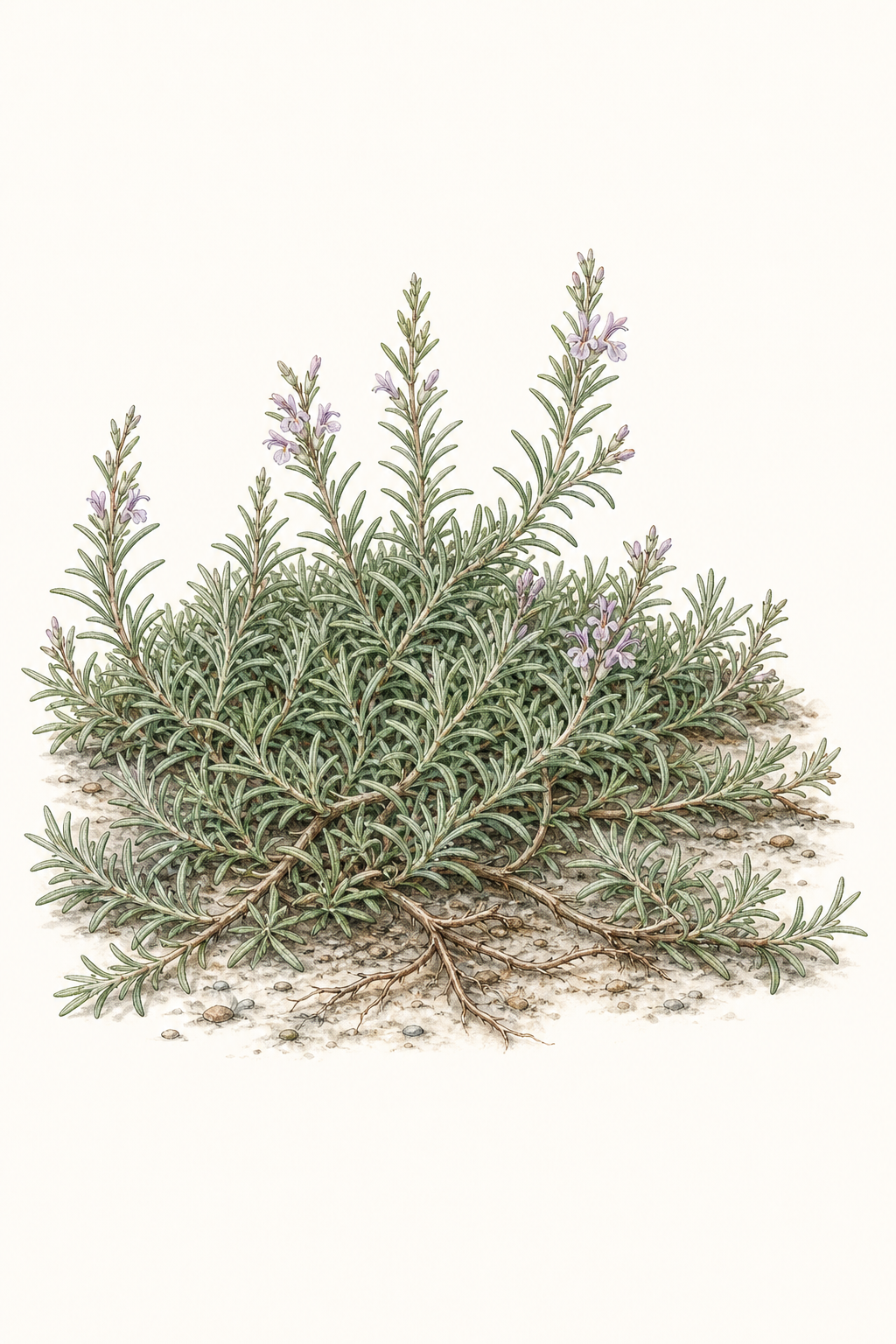
Fragrant as a sunlit hillside, Lockwood De Forest creeps with a silvery-green, resinous charm that perfumes the air when you brus…
Crop Dates
| Milestone | Date |
|---|---|
| Start Indoors | Dec 29th |
| Last Frost | Feb 9th |
| Transplant / Sow Outdoors | Mar 23rd |
| Harvest Begins | Jul 21st |
| Harvest Ends | Dec 9th |
Crop Details
| Trait | Value |
|---|---|
| Days to Maturity | 120 |
| Sun Requirements | Full Sun |
| Growth Habit | Spreading |
| Support Needed | None |
| Planting Depth | Normal |
| Germination Temp (°F) | 70 |
| Min Soil Temp (°F) | 60 |
| Min Night Temp (°F) | 50 |
| Harden Off (days) | 10 |
Recommended Companions
Frequently Asked Questions
What pests or diseases commonly affect Salvia rosmarinus (Lockwood De Forest), and how can I stop them?
How often should I water Salvia rosmarinus during its main growing phase (after it establishes)?
How do I tell when Salvia rosmarinus (Lockwood De Forest) is ready to harvest?
Fragrant as a sunlit hillside, Lockwood De Forest creeps with a silvery-green, resinous charm that perfumes the air when you brush past it. Its narrow, needlelike leaves hold a bold, piney-rosemary flavor with a clean, aromatic bite—ideal for drying and for crafting deeply fragrant herb blends. Let this trailing perennial spill over edges and pathways, where its dense mat and enduring scent make it a favorite for pollinators all season long.
Sowing Tips

Transplant Conditions
Wait until soil reaches 60°F and nights stay above 50°F before moving outdoors. Harden off for 10 days first.
Expert Note

Start rosemary indoors with warmth, then transplant only after nights are consistently mild and acclimate slowly to full sun.