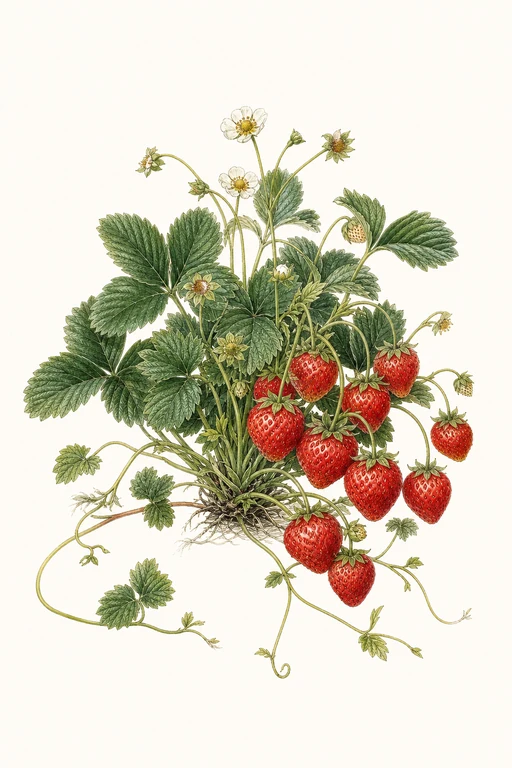
Quinault
Strawberry
🌱 90d to harvest
Clumping
Aromas of sun-warmed berries rise at first touch—Quinault Strawberry delivers a lush, sweet-tart perfume with a vivid, glossy red…
Crop Dates
| Milestone | Date |
|---|---|
| Start Indoors | Direct Sow |
| Last Frost | Feb 9th |
| Transplant / Sow Outdoors | Feb 9th |
| Harvest Begins | May 10th |
| Harvest Ends | Dec 9th |
Crop Details
| Trait | Value |
|---|---|
| Days to Maturity | 90 |
| Sun Requirements | Full Sun |
| Growth Habit | Clumping |
| Support Needed | None |
| Planting Depth | Normal |
| Germination Temp (°F) | 70 |
| Min Soil Temp (°F) | 40 |
| Min Night Temp (°F) | 32 |
| Harden Off (days) | 5 |
Recommended Companions
Frequently Asked Questions
What’s the most common disease pest issue for Fragaria × ananassa (quinault strawberries) in home gardens, and how do I manage it?
Watch for gray mold (Botrytis) on berries, especially when plants stay wet or fruit touches soil. Remove and discard infected berries immediately, improve airflow with wider spacing, and water at the soil line (not over the leaves). If you’re seeing repeated outbreaks, use a strawberry-safe fungicide labeled for edible fruit and follow the label reapplication interval.
How often should I water Fragaria × ananassa during the main growing phase, and what soil moisture level should I maintain?
During active growth and fruiting, keep soil consistently moist but not soggy—aim for about 1–1.5 inches of water per week, split into 1–2 deep waterings. Let the top 1 inch of soil dry slightly between waterings so roots don’t sit in water. Mulch can help stabilize moisture, which reduces berry rot.
How can I tell when quinault strawberries are ready to harvest?
Harvest when berries are fully red (no white or green shoulders), glossy, and easily detach when you gently lift and twist. For best flavor, pick in the morning after dew dries but before the hottest part of the day. If berries still taste tart and hard, leave them a few more days on the plant to finish ripening.