
African Blue Basil
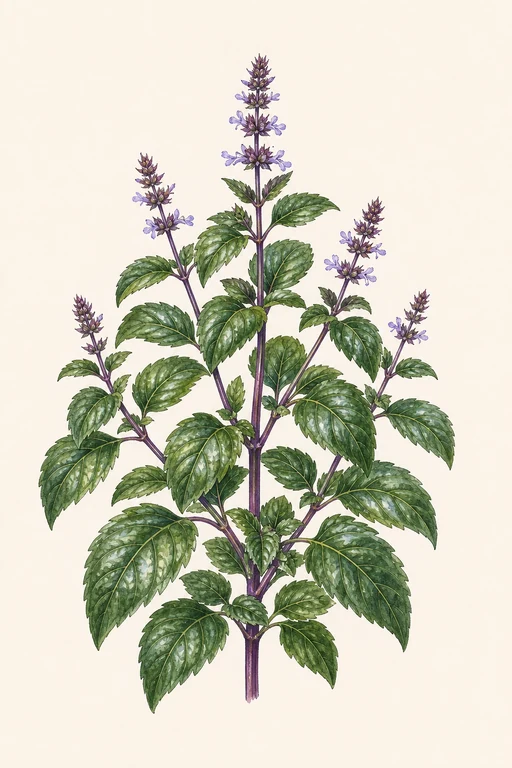
Experience the enchanting aroma and vibrant flavor of African Blue Basil, a striking variety that boasts a rich, spicy profile with hints of mint and clove.
Its lush, dark green leaves are beautifully contrasted by delicate purple flowers, making it a stunning addition to any garden. Ideal for fresh salads, pestos, and herbaceous infusions, this basil variety will elevate your culinary creations with its robust character and aromatic charm.
Light: Full SunMaturity: 65 DaysHabit: Upright
Crop Dates : 1b
| Milestone | Date |
|---|---|
| Last Frost | Jun 1st |
| Growing Approach | Protected Environment Only |
Crop Details
| Trait | Value |
|---|---|
| Days to Maturity | 65 |
| Sun Requirements | Full Sun |
| Growth Habit | Upright |
| Support Needed | None |
| Planting Depth | Normal |
| Germination Temp (°F) | 70 |
| Min Soil Temp (°F) | 60 |
| Min Night Temp (°F) | 50 |
| Harden Off (days) | 10 |
Culinary Notes

Chef's Note
African Blue Basil has a peppery, clove-warm character that stays aromatic instead of turning candy-sweet, with a minty chill that makes it feel bright even when the leaves are cooked briefly. Use it off-heat for maximum lift—or grind it into pesto for a sauce that tastes assertive, not timid.

Best Uses
- pesto where the heat reads as a peppery edge rather than sweet green basil
- fresh torn-leaf salads and mozzarella plates—best added at the last second
- herbaceous infusions and quick syrups where the clove note can bloom
- finish for hot dishes (rice, beans, grilled proteins) off-heat to preserve the mint-cool edge

Flavor Profile

Frequently Asked Questions
Why are my African Blue Basil leaves turning yellow with grayish spots and curling, and what should I do?
How often should I water African Blue Basil during its main growing phase (about weeks 3–8)?
How can I tell when African Blue Basil is ready to harvest at 65 days?
Sowing Tips

Transplant Conditions
Wait until soil reaches 60°F and nights stay above 50°F before moving outdoors. Harden off for 10 days first.
Expert Note

For best growth and strong flavor, transplant into warm soil after nights stay reliably above 50°F and pinch flower buds early if you want maximum leaf production.