
African Sunset
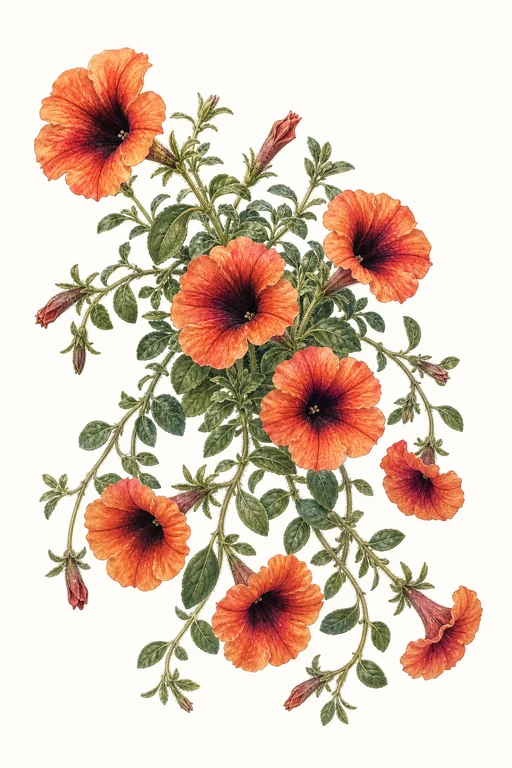
A living cascade of color, African Sunset drapes the garden in velvety, sunset-bright blooms that seem to glow from within—warm apricot-orange to ember-red with darker, velvety throats.
Each flower carries a soft, slightly ruffled texture and a generous, open trumpet silhouette that invites lingering admiration from spring through fall. Perfect for trailing over containers, window boxes, and hanging baskets, African Sunset brings nonstop showy color to borders and pathways as a spreading annual centerpiece.
Light: Full SunMaturity: 90 DaysHabit: Spreading
Crop Dates : 13a
| Milestone | Date |
|---|---|
| Climate | Frost-Free Climate |
| Growing Approach | Continuous Production |
Crop Details
| Trait | Value |
|---|---|
| Days to Maturity | 90 |
| Sun Requirements | Full Sun |
| Growth Habit | Spreading |
| Support Needed | None |
| Planting Depth | Surface |
| Germination Temp (°F) | 70 |
| Min Soil Temp (°F) | 60 |
| Min Night Temp (°F) | 50 |
| Harden Off (days) | 7 |
Culinary Notes

Chef's Note
Edible petunia blooms are all about restraint: they taste floral and faintly sweet, so treat them like punctuation rather than a main ingredient. African Sunset’s velvety trumpet makes a beautiful edible garnish, but keep pairing acid (citrus, wine) front-and-center so the flavor stays bright instead of soapy.

Best Uses
- Use sparingly as an edible garnish on acidic dishes where the sweetness doesn’t clash—think citrusy salads and crudo
- Candy-like petals: lightly macerate in sugar for a quick, decorative finish on cakes or panna cotta
- Infuse into simple syrups or milk/cream for a delicate floral tint—no long steeping

Flavor Profile

Frequently Asked Questions
What pest or disease most commonly affects Petunia × atkinsiana (African Sunset), and how can I treat it?
How often should I water Petunia × atkinsiana during the main growing phase?
How do I know when African Sunset (Petunia × atkinsiana) is ready to harvest?
Sowing Tips

Transplant Conditions
Wait until soil reaches 60°F and nights stay above 50°F before moving outdoors. Harden off for 7 days first.
Expert Note

Start petunias early under lights if you want the earliest blooms, then transplant only after nights are reliably warm.