
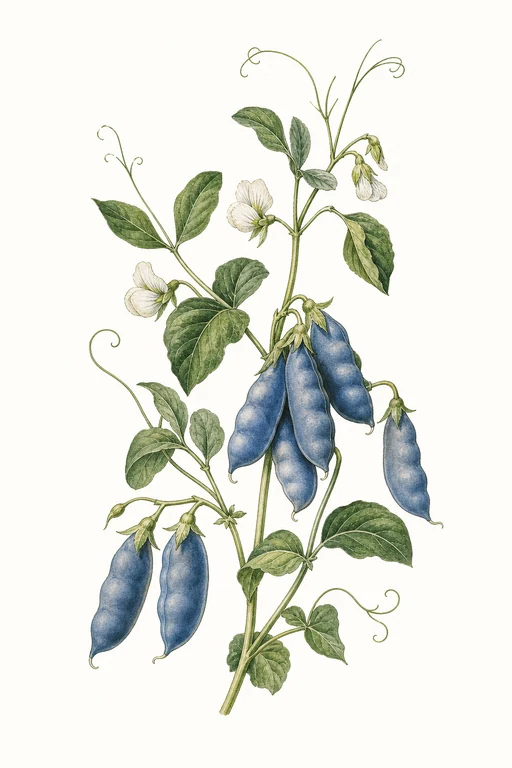
Blue Podded Pea
Sweet, cool-snap pods open to reveal peas with a vivid, garden-fresh sweetness and a satisfyingly plump, tender bite.
Blue Podded Pea forms sturdy, productive plants that shell cleanly, delivering a generous harvest of uniform peas ideal for steaming, simmering, and brightening sauces with their delicate, true-pea flavor. Grow it for the joy of watching those blue-toned pods swell and turn—then enjoy their tender texture at the peak of maturity.
Light: Full SunMaturity: 70 DaysHabit: Upright
Crop Dates : 13a
| Milestone | Date |
|---|---|
| Start Indoors | — |
| Climate | Frost-Free Climate |
| Transplant / Sow Outdoors | Oct 1st |
| Harvest Begins | Dec 10th |
| Harvest Ends | Feb 28th |
Crop Details
| Trait | Value |
|---|---|
| Days to Maturity | 70 |
| Sun Requirements | Full Sun |
| Growth Habit | Upright |
| Support Needed | Trellis |
| Planting Depth | Normal |
| Germination Temp (°F) | 55 |
| Min Soil Temp (°F) | 45 |
| Min Night Temp (°F) | 28 |
| Harden Off (days) | Not Required |
Culinary Notes

Chef's Note
These shelling/snap-type peas hit their stride when cooked fast—steam or simmer briefly so the pods’ sweetness translates into a plump, not-dulled bite. Their delicate true-pea flavor loves bright fat-and-acid (butter + lemon) more than heavy seasoning.

Best Uses
- quick-steam with a knob of butter and lemon zest
- shuck-and-simmer into a thin, bright pea purée for spooning
- stir into warm rice or buttered noodles so they stay tender
- fold into spring soup or chowder at the last minute for vivid color and sweetness

Flavor Profile

Frequently Asked Questions
Why are my blue-podded pea plants developing white fuzzy growth or leaf spotting, and what should I do?
How often should I water blue-podded peas during the main growing phase (flowering to pod fill)?
How can I tell when blue-podded peas are ready to harvest?
Sowing Tips

Transplant Conditions
Wait until soil reaches 45°F and nights stay above 28°F before moving outdoors.
Expert Note

For the sweetest shell peas, sow in cool weather and keep soil consistently moist—pea flavor drops as heat arrives.