
Bonanza Red
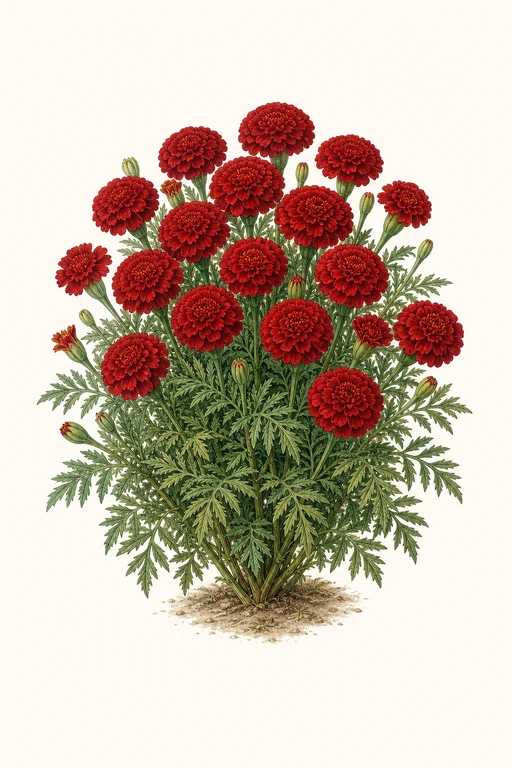
Velvety, flame-bright blooms of Bonanza Red arrive with a lush, velour-like depth—deep crimson to warm scarlet petals that hold their color with a confident, tidy presence.
The flowers are richly layered and compact, forming a dense mound of color that stays crisp in the garden and makes a striking statement from spring through early fall. Grow Bonanza Red for its bold ornamental impact, ideal for edging, beds, and containers where you want nonstop, showy color.
Light: Full SunMaturity: 60 DaysHabit: Bush
Planting schedules and alerts are optimized for Columbus (Zone 6b).
Crop Dates
| Milestone | Date |
|---|---|
| Start Indoors | Mar 14th |
| Last Frost | Apr 25th |
| Transplant / Sow Outdoors | Jun 20th |
| Harvest Begins | Aug 19th |
| Harvest Ends | Oct 16th |
Crop Details
| Trait | Value |
|---|---|
| Days to Maturity | 60 |
| Sun Requirements | Full Sun |
| Growth Habit | Bush |
| Support Needed | None |
| Planting Depth | Normal |
| Germination Temp (°F) | 70 |
| Min Soil Temp (°F) | 55 |
| Min Night Temp (°F) | 50 |
| Harden Off (days) | 7 |
Culinary Notes

Chef's Note
Even though it’s sold as a bedding bloom, Bonanza Red petals can be eaten for that peppery, slightly bitter floral lift—best when used like a spicy-herb garnish rather than a sweet flower. Use sparingly and pair with acid and fat so the bitterness reads bright instead of harsh.

Best Uses
- torn petals as a color-carrying garnish on rich mains
- quick-pickled petals for a sharp, briny pop
- folded into compound butter for a crimson herbal smear
- mixed into green salads where the bitterness can stand up to fat and salt

Flavor Profile

Frequently Asked Questions
What pest or disease most commonly affects Tagetes patula (Bonanza Red) and what should I do?
How often should I water Tagetes patula during peak growth?
How can I tell when Bonanza Red Tagetes patula is ready to harvest?
Sowing Tips

Transplant Conditions
Wait until soil reaches 55°F and nights stay above 50°F before moving outdoors. Harden off for 7 days first.
Expert Note

Start indoors early for uniform bloom, then move outdoors only after nights are reliably warm to avoid stunted, leggy growth.