
Borlotto Lamon
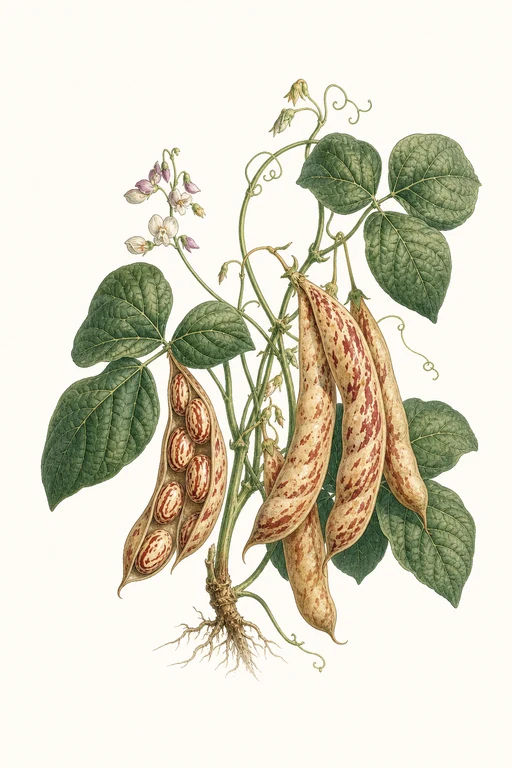
Warm, sun-dried beauty in every pod—Borlotto Lamon delivers creamy beans marked with bold, painterly streaks that feel velvety to the palate.
Expect a firm, substantial texture that holds its shape with satisfying richness, ideal for slow-simmered classics and hearty pantry staples. Grow for a dependable 100-day rhythm and a harvest that looks as good as it tastes—straight from the garden to your table.
Light: Full SunMaturity: 100 DaysHabit: Bush
Crop Dates : 2a
| Milestone | Date |
|---|---|
| Last Frost | May 25th |
| Growing Approach | Protected Environment Only |
Crop Details
| Trait | Value |
|---|---|
| Days to Maturity | 100 |
| Sun Requirements | Full Sun |
| Growth Habit | Bush |
| Support Needed | None |
| Planting Depth | Normal |
| Germination Temp (°F) | 70 |
| Min Soil Temp (°F) | 60 |
| Min Night Temp (°F) | 50 |
| Harden Off (days) | Not Required |
Culinary Notes

Chef's Note
Borlotto Lamon holds its shape through a proper slow simmer, so you get that satisfying, creamy interior without turning into mush. The painterly streaks are a clue: treat them like a main—stew them with garlic, sage, and bay, then finish with lemon to make the bean flavor pop.

Best Uses
- long simmered borlotti-style beans with herbs and aromatics
- thick bean purée for crostini or sandwich spreads
- braised beans in tomato-based ragù or stew
- warm salad application once fully cooked, dressed while still plush

Flavor Profile

Frequently Asked Questions
Why are my Borlotto Lamon beans developing white, fuzzy growth or leaf spotting, and what should I do?
How often should I water Borlotto Lamon beans during the main growing phase?
How can I tell when Borlotto Lamon beans are ready to harvest?
Sowing Tips

Transplant Conditions
Wait until soil reaches 60°F and nights stay above 50°F before moving outdoors.
Expert Note

Direct-sow borlotti beans after soil warms (and keep them evenly moist early) for strong, uniform stands.