
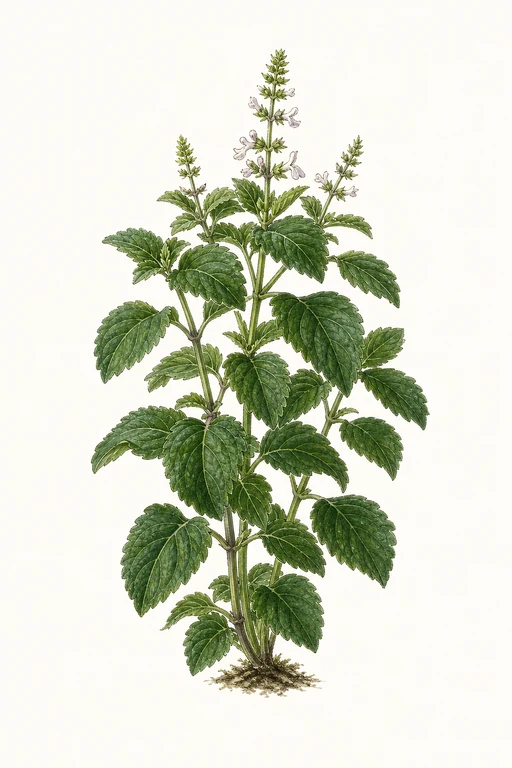
Camphor Basil
Aromatic as a warm camphor breeze, Camphor Basil fills the garden with a cool, resinous fragrance and a bright herbal bite.
Its leaves are tender and finely textured, forming an upright, lush mound of deep green foliage that’s especially prized for fresh use, fragrant garnishes, and bold herbal flavor in sauces and pesto-style blends. Grow it for its distinctive, unmistakable scent as much as its vivid, leafy presence on the plate.
Light: Full SunMaturity: 70 DaysHabit: Upright
Crop Dates : 6a
| Milestone | Date |
|---|---|
| Start Indoors | Mar 20th |
| Last Frost | May 1st |
| Transplant / Sow Outdoors | Jun 26th |
| Harvest Begins | Sep 4th |
| Harvest Ends | Oct 10th |
Crop Details
| Trait | Value |
|---|---|
| Days to Maturity | 70 |
| Sun Requirements | Full Sun |
| Growth Habit | Upright |
| Support Needed | None |
| Planting Depth | Normal |
| Germination Temp (°F) | 70 |
| Min Soil Temp (°F) | 60 |
| Min Night Temp (°F) | 50 |
| Harden Off (days) | 12 |
Culinary Notes

Chef's Note
This basil variety reads like fresh basil with a cool, resinous camphor edge—powerful when treated gently, and easily muted by long cooking. Use it for last-minute brightness: tear it, bruise it, and let its aromatic bite land before heat takes over.

Best Uses
- tear-and-drop finishing over grilled fish or warm grains
- rapid-blend pesto-style sauces for a strong aromatic hit (fast, not long-cooked)
- herb-forward marinades and yogurt/cream sauces
- fragrant garnish for soups, curries, and pan sauces

Flavor Profile

Frequently Asked Questions
What pest or disease commonly affects Ocimum kilimandscharicum (camphor basil), and how do I stop it?
How often should I water camphor basil during its main growth phase (about weeks 3–10)?
How can I tell when Ocimum kilimandscharicum camphor basil is ready to harvest (around 70 days)?
Sowing Tips

Transplant Conditions
Wait until soil reaches 60°F and nights stay above 50°F before moving outdoors. Harden off for 12 days first.
Expert Note

Start indoors in warm soil, then transplant only after nights stay reliably warm (cool snaps can slow growth).