
Cardoon
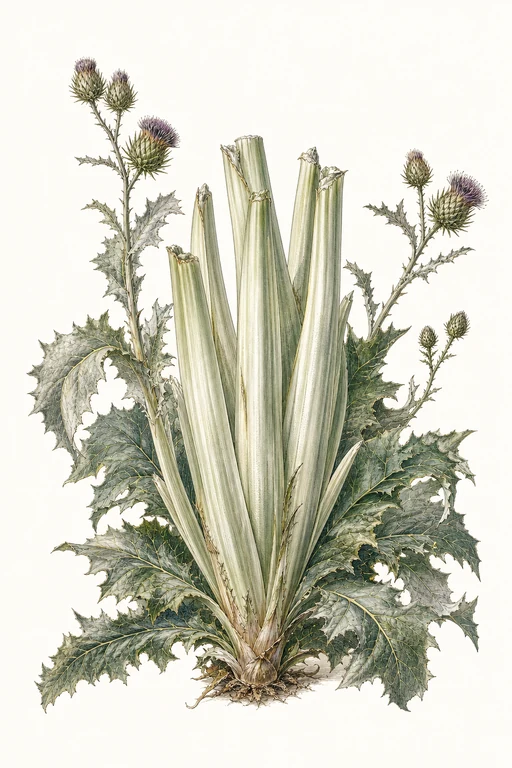
Unfurling in the garden with a statuesque, silvery presence, Cardoon forms thick, upright ribs that promise a crisp, artichoke-like allure—earthy, gently bitter, and wonderfully aromatic.
At maturity, the blanched stems develop a firm, tender texture with a refined bite, ideal for roasting to deepen their character, or for preparing into elegant dishes where their bold flavor can shine. Grow it for a dramatic centerpiece harvest and a distinctive taste that rewards patience over 120 days.
Light: Full SunMaturity: 120 DaysHabit: Upright
Planting schedules and alerts are optimized for Columbus (Zone 6b).
Crop Dates
| Milestone | Date |
|---|---|
| Start Indoors | Direct Sow |
| Last Frost | Apr 25th |
| Transplant / Sow Outdoors | Apr 18th |
| Harvest Begins | Aug 16th |
| Harvest Ends | Oct 16th |
Crop Details
| Trait | Value |
|---|---|
| Days to Maturity | 120 |
| Sun Requirements | Full Sun |
| Growth Habit | Upright |
| Support Needed | None |
| Planting Depth | Normal |
| Germination Temp (°F) | 70 |
| Min Soil Temp (°F) | 45 |
| Min Night Temp (°F) | 28 |
| Harden Off (days) | 5 |
Culinary Notes

Chef's Note
Cardoon is for cooks who like bitterness with manners—its rigid ribs turn pleasantly tender only once they’re properly prepped, then they hold shape under heat like sturdy artichoke hearts. Pair it with lemon, salty anchovy, and dairy so the briny fat rounds the bitterness instead of amplifying it.

Best Uses
- blanched-and-roasted ribs until edges bronze and the interior turns silky-tender
- braises with acidic wine or tomatoes to tame bitterness
- creamy gratins and bakes where the bitterness cuts through richness
- steamed and dressed with lemony vinaigrette for a crisp, palate-clearing salad component

Flavor Profile

Frequently Asked Questions
What pest or disease commonly affects Cardoon (Cynara scolymus), and what should I do?
How often should I water cardoon during its main growing phase?
How can I tell when cardoon is ready to harvest?
Sowing Tips

Transplant Conditions
Wait until soil reaches 45°F and nights stay above 28°F before moving outdoors. Harden off for 5 days first.
Expert Note

For the blanched, tender stalks, keep plants well-watered and gradually blanch with soil or sleeves once stalks are established.