
Catskill
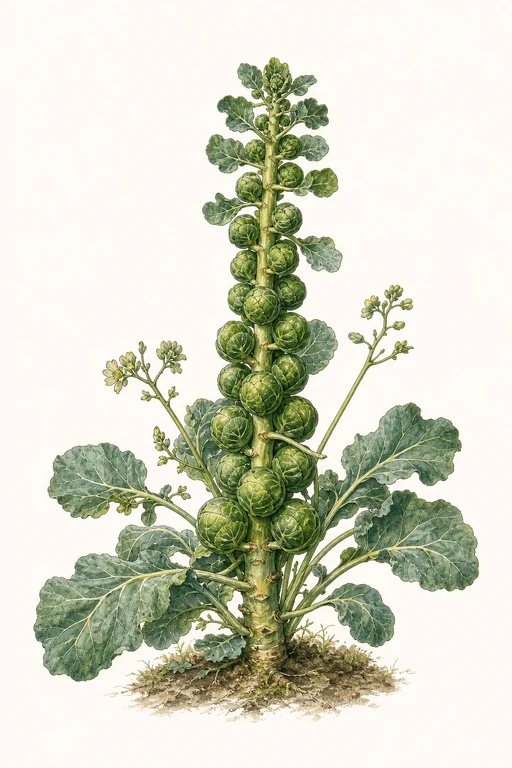
Sweetly nutty and delicately cabbage-sweet, Catskill Brussels sprouts form tight, jewel-like heads that feel firm and velvety to the touch.
At maturity, the compact sprouts hold their deep green color with a crisp, tender bite that shines in roasted trays, gratins, and hearty skillet sautés—also wonderful for pickling when you want a tangy crunch. Grow Catskill for a dependable 90-day rhythm and a harvest that’s as satisfying to gather as it is to savor.
Light: Full SunMaturity: 90 DaysHabit: Upright
Planting schedules and alerts are optimized for Columbus (Zone 6b).
Crop Dates
| Milestone | Date |
|---|---|
| Start Indoors | Mar 28th |
| Last Frost | Apr 25th |
| Transplant / Sow Outdoors | Apr 18th |
| Harvest Begins | Jul 17th |
| Harvest Ends | Oct 16th |
Crop Details
| Trait | Value |
|---|---|
| Days to Maturity | 90 |
| Sun Requirements | Full Sun |
| Growth Habit | Upright |
| Support Needed | None |
| Planting Depth | Normal |
| Germination Temp (°F) | 45 |
| Min Soil Temp (°F) | 45 |
| Min Night Temp (°F) | 32 |
| Harden Off (days) | 6 |
Culinary Notes

Chef's Note
Catskill’s compact, velvety sprouts deliver a crisp, tender bite with a sweet, nutty cabbage core—ideal when you want caramelized edges without mush. Roast hot and dry (or go rich with browned butter), then finish with something bright like lemon or balsamic to keep the flavor from tipping heavy.

Best Uses
- high-heat roast until the outer leaves caramelize and the centers stay crisp-tender
- sizzled-in-a-skillet with bacon fat or browned butter for fast, jammy edges
- shaved or half-sliced gratin with cream and a sharp cheese to balance cabbage sweetness
- quick pickling for tangy crunch with a clean snap

Flavor Profile

Frequently Asked Questions
How can I prevent and treat clubroot (and related stem swelling) on Brassica oleracea var. gemmifera (Brussels sprouts)?
How often should I water Brussels sprouts during the main growing phase to keep heads forming well?
When are Brussels sprouts (Brassica oleracea var. gemmifera) ready to harvest, and how do I know?
Sowing Tips

Transplant Conditions
Wait until soil reaches 45°F and nights stay above 32°F before moving outdoors. Harden off for 6 days first.
Expert Note

Start indoors for a head start, then transplant as soon as outdoor conditions are cool and soils are workable—Brussels thrive with cold, not heat.