
Charleston Wakefield
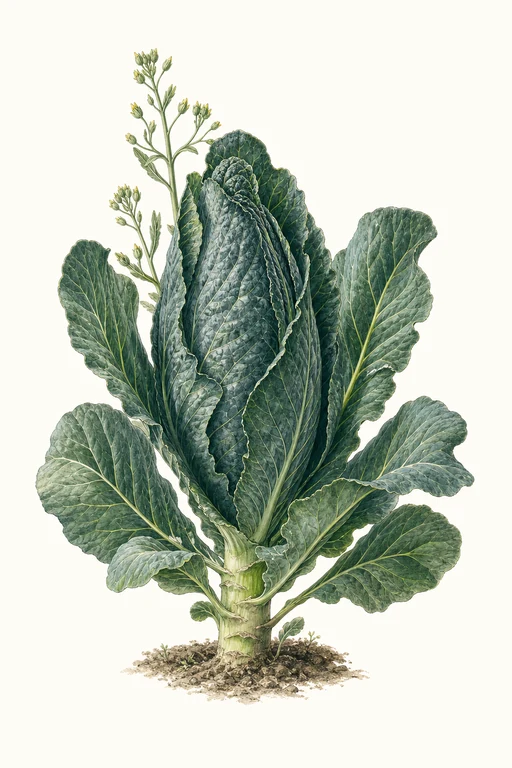
Sweetly crisp and richly aromatic, Charleston Wakefield forms tight, elongated heads with a cool, blue-green sheen that feels almost velvety to the eye.
The flavor is mild and cabbage-forward with a clean snap, making it a standout for fresh slaws and hearty braises, while its dense leaves also shine in tangy ferments and pickles. Grow this classic 78-day favorite for dependable structure, excellent garden presence, and a harvest that stays satisfying from first bite to the last jar.
Light: Full SunMaturity: 78 DaysHabit: Rosette
Location not set yet
Location not set yet
Enter your ZIP for local crop dates
Charleston Wakefield Planting Dates by USDA Zone
Estimated US hardiness-zone windows for sow, transplant, and harvest. Enter a US ZIP above for exact local dates, or open a zone below.
| Zone | Start Indoors | Sow / Transplant | Harvest |
|---|---|---|---|
| Zone 1a | Protected Environment Only | ||
| Zone 1b | Protected Environment Only | ||
| Zone 2a | Apr 27th | May 25th | Aug 11th – Aug 29th |
| Zone 2b | Apr 17th | May 15th | Aug 1st – Aug 25th |
| Zone 3a | Apr 17th | May 15th | Aug 1st – Sep 1st |
| Zone 3b | Apr 21st | May 19th | Aug 5th – Sep 21st |
| Zone 4a | Apr 17th | May 15th | Aug 1st – Sep 24th |
| Zone 4b | Apr 15th | May 13th | Jul 30th – Sep 27th |
| Zone 5a | Apr 10th | May 8th | Jul 25th – Sep 30th |
| Zone 5b | Apr 6th | May 4th | Jul 21st – Oct 5th |
| Zone 6a | Apr 3rd | May 1st | Jul 18th – Oct 10th |
| Zone 6b | Mar 28th | Apr 25th | Jul 12th – Oct 16th |
| Zone 7a | Mar 23rd | Apr 20th | Jul 7th – Oct 20th |
| Zone 7b | Mar 13th | Apr 10th | Jun 27th – Oct 28th |
| Zone 8a | Mar 4th | Apr 1st | Jun 18th – Nov 5th |
| Zone 8b | Feb 23rd | Mar 23rd | Jun 9th – Nov 12th |
| Zone 9a | Feb 6th | Mar 6th | May 23rd – Nov 26th |
| Zone 9b | Jan 12th | Feb 9th | Apr 28th – Dec 9th |
| Zone 10a | — | Oct 1st | Dec 18th – Feb 28th |
| Zone 10b | — | Oct 1st | Dec 18th – Feb 28th |
| Zone 11a | — | Oct 1st | Dec 18th – Feb 28th |
| Zone 11b | — | Oct 1st | Dec 18th – Feb 28th |
| Zone 12a | — | Oct 1st | Dec 18th – Feb 28th |
| Zone 12b | — | Oct 1st | Dec 18th – Feb 28th |
| Zone 13a | — | Oct 1st | Dec 18th – Feb 28th |
| Zone 13b | — | Oct 1st | Dec 18th – Feb 28th |
Crop Details
| Trait | Value |
|---|---|
| Days to Maturity | 78 |
| Sun Requirements | Full Sun |
| Growth Habit | Rosette |
| Support Needed | None |
| Planting Depth | Normal |
| Germination Temp (°F) | 45 |
| Min Soil Temp (°F) | 40 |
| Min Night Temp (°F) | 32 |
| Harden Off (days) | 6 |
Culinary Notes

Chef's Note
Charleston Wakefield’s mild sweetness and clean snap make it a slaw cabbage that doesn’t go limp the second it meets acid. When heat shows up, the dense leaves turn tender without losing structure—built for braises and ferments that stay punchy through the last forkful.

Best Uses
- fresh slaw where the shreds hold a crisp bite under dressing
- hot-and-sour braise with a quick reduce for glossy, tender leaves
- lacto-fermented cabbage and quick pickles for tight, tangy snap
- sheet-pan roast or sauté to drive off bitterness and brown the edges

Flavor Profile

Frequently Asked Questions
What pest or disease most commonly affects Brassica oleracea var. capitata (Charleston Wakefield) and what should I do?
How often should I water Charleston Wakefield during its main head-forming growth?
How can I tell when Charleston Wakefield is ready to harvest?
Sowing Tips

Transplant Conditions
Wait until soil reaches 40°F and nights stay above 32°F before moving outdoors. Harden off for 6 days first.
Expert Note

For best head formation, keep plants from overheating—use row cover or shade cloth during warm spells and keep soil evenly moist.