
Churchill
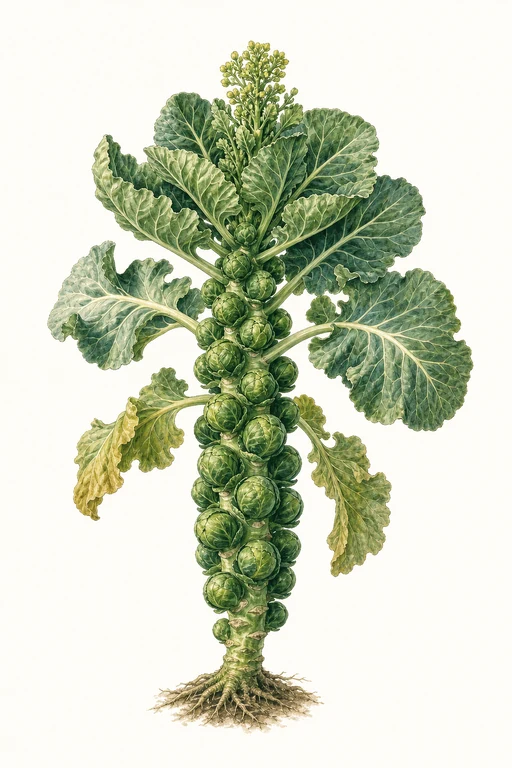
Sweet, nutty sprouts emerge in tight, jewel-like heads with a deep forest-green sheen and a pleasantly tender bite.
Churchill forms sturdy, upright stalks that hold their color beautifully through cool weather, making each harvest feel like a slow, satisfying crescendo. Ideal for roasting and braising, Churchill also shines in hearty winter sauces and savory gratins where its gentle sweetness can fully come forward.
Light: Full SunMaturity: 85 DaysHabit: Upright
Planting schedules and alerts are optimized for Columbus (Zone 6b).
Crop Dates
| Milestone | Date |
|---|---|
| Start Indoors | Mar 14th |
| Last Frost | Apr 25th |
| Transplant / Sow Outdoors | Apr 25th |
| Harvest Begins | Jul 19th |
| Harvest Ends | Oct 16th |
Crop Details
| Trait | Value |
|---|---|
| Days to Maturity | 85 |
| Sun Requirements | Full Sun |
| Growth Habit | Upright |
| Support Needed | None |
| Planting Depth | Normal |
| Germination Temp (°F) | 45 |
| Min Soil Temp (°F) | 40 |
| Min Night Temp (°F) | 32 |
| Harden Off (days) | 6 |
Culinary Notes

Chef's Note
Churchill’s tight, jewel-like heads lean sweet and nutty, and they stay tender instead of going sulfur-sharp—so they’re built for high-heat roasting where the cut surfaces caramelize. Pair them with smoky fat and sharp citrus/vinegar to keep the flavor bright while the sprouts turn silky in the center.

Best Uses
- hot oven roasting on high heat until the outer leaves bronze and crisp
- low-and-slow braising in stock until the centers turn buttery
- winter gratins where it blankets in cream and cheese without getting watery
- savory reductions—glaze it with butter and a splash of vinegar for shine and balance

Flavor Profile

Frequently Asked Questions
How do I prevent and control cabbage aphids or clubroot on Brussels sprouts (Brassica oleracea var. gemmifera)?
During the main growing phase, how often should I water Brussels sprouts to keep them productive?
How can I tell when my Brussels sprouts are ready to harvest (around 85 days)?
Sowing Tips

Transplant Conditions
Wait until soil reaches 40°F and nights stay above 32°F before moving outdoors. Harden off for 6 days first.
Expert Note

For best sweetness and yield, keep plants evenly moist and avoid heat stress—brussels sprouts perform best in cool weather.