
Clementine
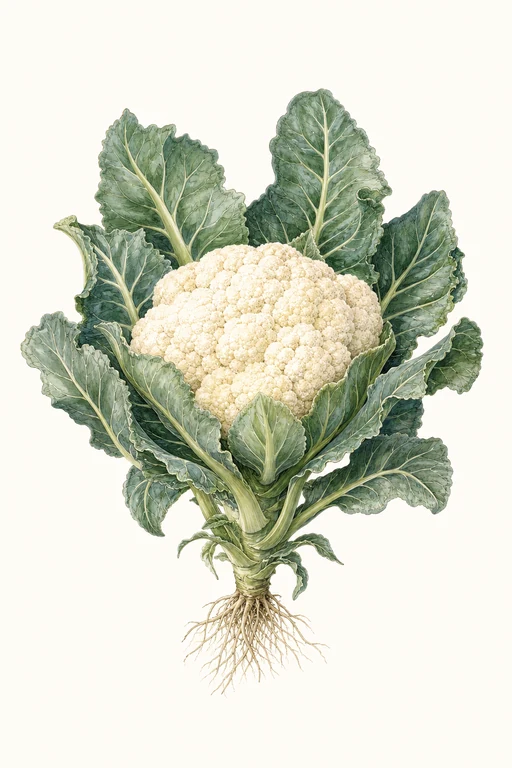
Clementine cauliflower brings a luminous, creamy-white dome that feels velvety at first glance and turns tender with a gentle, sweet flavor.
The curds are tightly knit and beautifully uniform, holding their shape for a satisfying bite and a clean, refined texture. Grow Clementine for standout fresh-market presence and for showy roasts, gratins, and silky sauces that highlight its delicate character.
Light: Full SunMaturity: 75 DaysHabit: Rosette
Planting schedules and alerts are optimized for Columbus (Zone 6b).
Crop Dates
| Milestone | Date |
|---|---|
| Start Indoors | Mar 28th |
| Last Frost | Apr 25th |
| Transplant / Sow Outdoors | Apr 25th |
| Harvest Begins | Jul 9th |
| Harvest Ends | Oct 16th |
Crop Details
| Trait | Value |
|---|---|
| Days to Maturity | 75 |
| Sun Requirements | Full Sun |
| Growth Habit | Rosette |
| Support Needed | None |
| Planting Depth | Normal |
| Germination Temp (°F) | 40 |
| Min Soil Temp (°F) | 40 |
| Min Night Temp (°F) | 32 |
| Harden Off (days) | 6 |
Culinary Notes

Chef's Note
Clementine cauliflower’s tightly knit curds behave—roast it or gratin it and it keeps its shape for a clean, creamy bite instead of turning ragged. Its mild sweetness loves butter-and-cheese richness and wakes up fast with a hit of lemon.

Best Uses
- shallow-roast for caramelized edges without blowing apart the curd
- silky gratin or cream-baked florets where the tight texture holds a clean fork bite
- whipped/cheesy purée for a smooth, spoonable side
- quick sauté with butter for a refined, low-smoke browning

Flavor Profile

Frequently Asked Questions
What pest or disease should I watch for when growing Brassica oleracea var. botrytis (clementine), and how do I manage it?
How often should I water clementine during the main growing phase?
How can I tell when clementine is ready to harvest?
Sowing Tips

Transplant Conditions
Wait until soil reaches 40°F and nights stay above 32°F before moving outdoors. Harden off for 6 days first.
Expert Note

For best orange color and tight curds, keep soil consistently moist and avoid heat spikes (use light shade or row cover if summer weather arrives early).