
Coccineus Thyme
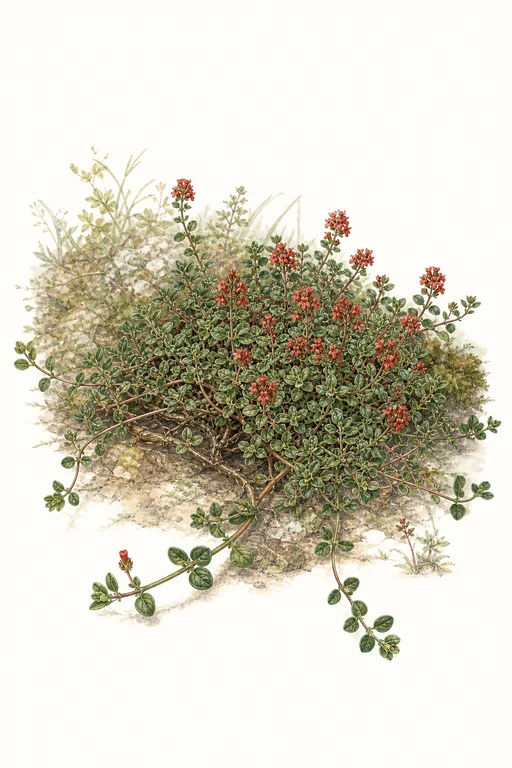
Fragrant as a sun-warmed hillside, Coccineus Thyme carpets the garden with a vivid, aromatic presence—its tiny leaves release a bright, herbal perfume at every touch.
At maturity, the mat forms a low, spreading cushion with a fine, velvety texture and a graceful trailing habit that looks as good as it smells. Ideal for edging and ground-cover plantings, it brings a living, fragrant accent to pathways and sunny borders while offering abundant blooms that draw pollinators through the season.
Light: Full SunMaturity: 120 DaysHabit: Spreading
Planting schedules and alerts are optimized for Columbus (Zone 6b).
Crop Dates
| Milestone | Date |
|---|---|
| Start Indoors | Mar 14th |
| Last Frost | Apr 25th |
| Transplant / Sow Outdoors | Apr 25th |
| Harvest Begins | Aug 23rd |
| Harvest Ends | Oct 16th |
Crop Details
| Trait | Value |
|---|---|
| Days to Maturity | 120 |
| Sun Requirements | Full Sun |
| Growth Habit | Spreading |
| Support Needed | None |
| Planting Depth | Surface |
| Germination Temp (°F) | 70 |
| Min Soil Temp (°F) | 50 |
| Min Night Temp (°F) | 40 |
| Harden Off (days) | 7 |
Culinary Notes

Chef's Note
Creeping thyme has a vivid, sun-warmed leafiness—tiny but punchy—so it behaves best when you keep heat brief and let the aroma lead. Chop it fine and add at the end, because long cooking softens the flavor into something flatter than the fresh, menthol-adjacent perfume you’re chasing.

Best Uses
- chopped into vinaigrettes and pan sauces right at the end so the perfume stays up
- tossed through warm potatoes or roasted carrots for an earthy snap
- used as a fragrant garnish on grilled fish or lamb (a light shower, not a heavy handful)
- steeped briefly for a tea-like infusion in summer drinks

Flavor Profile

Frequently Asked Questions
What pest or disease commonly affects Thymus serpyllum (creeping wild thyme), and how can I prevent it?
How often should I water Thymus serpyllum during its main growing phase?
How do I know when Thymus serpyllum is ready to harvest?
Sowing Tips

Transplant Conditions
Wait until soil reaches 50°F and nights stay above 40°F before moving outdoors. Harden off for 7 days first.
Expert Note

For fastest establishment, start indoors lightly, then transplant into very well-drained soil once frosts are over (thymus dislikes wet, cold roots).