
Colossus
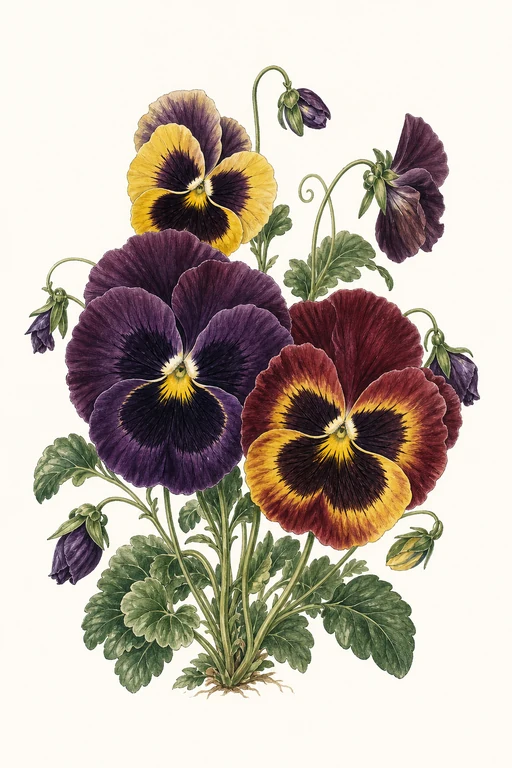
Imagine velvety petals unfurling in a grand, colossus-sized bloom—rich, velour-like color with a crisp, luminous center that seems to glow from within.
Colossus pansies bring a plush, slightly ruffled texture and a bold, face-forward patterning that makes every bed and container look richly dressed. Grow for standout seasonal color in cool weather, with flowers ideal for long-lasting garden display and striking mass plantings.
Light: Part SunMaturity: 70 DaysHabit: Rosette
Location not set yet
Location not set yet
Enter your ZIP for local crop dates
Colossus Planting Dates by USDA Zone
Estimated US hardiness-zone windows for sow, transplant, and harvest. Enter a US ZIP above for exact local dates, or open a zone below.
| Zone | Start Indoors | Sow / Transplant | Harvest |
|---|---|---|---|
| Zone 1a | Apr 6th | Jun 15th | Aug 24th – Jul 15th |
| Zone 1b | Mar 23rd | Jun 1st | Aug 10th – Aug 1st |
| Zone 2a | Mar 16th | May 25th | Aug 3rd – Aug 29th |
| Zone 2b | Mar 6th | May 15th | Jul 24th – Aug 25th |
| Zone 3a | Mar 6th | May 15th | Jul 24th – Sep 1st |
| Zone 3b | Mar 10th | May 19th | Jul 28th – Sep 21st |
| Zone 4a | Mar 6th | May 15th | Jul 24th – Sep 24th |
| Zone 4b | Mar 4th | May 13th | Jul 22nd – Sep 27th |
| Zone 5a | Feb 27th | May 8th | Jul 17th – Sep 30th |
| Zone 5b | Feb 23rd | May 4th | Jul 13th – Oct 5th |
| Zone 6a | Feb 20th | May 1st | Jul 10th – Oct 10th |
| Zone 6b | Feb 14th | Apr 25th | Jul 4th – Oct 16th |
| Zone 7a | Feb 9th | Apr 20th | Jun 29th – Oct 20th |
| Zone 7b | Jan 30th | Apr 10th | Jun 19th – Oct 28th |
| Zone 8a | Jan 21st | Apr 1st | Jun 10th – Nov 5th |
| Zone 8b | Jan 12th | Mar 23rd | Jun 1st – Nov 12th |
| Zone 9a | Dec 26th | Mar 6th | May 15th – Nov 26th |
| Zone 9b | Dec 1st | Feb 9th | Apr 20th – Dec 9th |
| Zone 10a | — | Oct 1st | Dec 10th – Feb 28th |
| Zone 10b | — | Oct 1st | Dec 10th – Feb 28th |
| Zone 11a | — | Oct 1st | Dec 10th – Feb 28th |
| Zone 11b | — | Oct 1st | Dec 10th – Feb 28th |
| Zone 12a | — | Oct 1st | Dec 10th – Feb 28th |
| Zone 12b | — | Oct 1st | Dec 10th – Feb 28th |
| Zone 13a | — | Oct 1st | Dec 10th – Feb 28th |
| Zone 13b | — | Oct 1st | Dec 10th – Feb 28th |
Crop Details
| Trait | Value |
|---|---|
| Days to Maturity | 70 |
| Sun Requirements | Part Sun |
| Growth Habit | Rosette |
| Support Needed | None |
| Planting Depth | Normal |
| Germination Temp (°F) | 70 |
| Min Soil Temp (°F) | 40 |
| Min Night Temp (°F) | 28 |
| Harden Off (days) | 7 |
Culinary Notes

Chef's Note
With plush, velour petals and a crisp, bright center, Colossus pansies are best used like a delicate garnish: bloom first, flavor second. Keep heat contact short and pair with citrus, dairy, or honey so the floral sweetness reads clean instead of perfumey.

Best Uses
- as an edible garnish on chilled dishes where the petals stay intact
- scattering over fresh citrus salads and crème fraîche–based bites
- folding into warm-but-not-boiling finishing oil or butter (brief contact only)
- floating on top of cocktails and spritz-style drinks for color and aroma

Flavor Profile

Frequently Asked Questions
What’s the most common pest or disease issue for Viola × wittrockiana (pansy) and how do I treat it?
How often should I water Viola × wittrockiana during the main growing phase?
How can I tell when Viola × wittrockiana is ready to harvest?
Sowing Tips

Transplant Conditions
Wait until soil reaches 40°F and nights stay above 28°F before moving outdoors. Harden off for 7 days first.
Expert Note

For the biggest blooms, keep pansies cool (avoid hot spells) and transplant into rich, well-drained soil so they establish before summer heat arrives.