
Cow Horn
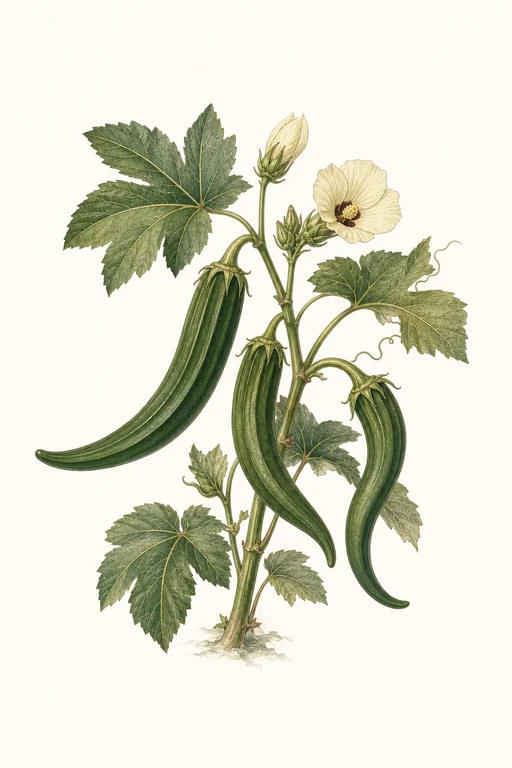
Tender, horn-shaped pods unfurl with a glossy, deep-green sheen and a crisp, succulent bite that feels almost juicy at first touch.
Cow Horn okra delivers long, gently ridged pods that hold their texture for standout roasting and grill-worthy browning, while also shining in fresh, quick pickles and silky, spoonable sauces. Sow with confidence for a steady harvest rhythm around 55 days—an elegant garden performer that rewards every picking with flavor-forward, garden-fresh pods.
Light: Full SunMaturity: 55 DaysHabit: Upright
Planting schedules and alerts are optimized for Columbus (Zone 6b).
Crop Dates
| Milestone | Date |
|---|---|
| Start Indoors | Direct Sow |
| Last Frost | Apr 25th |
| Transplant / Sow Outdoors | Jun 20th |
| Harvest Begins | Aug 14th |
| Harvest Ends | Oct 16th |
Crop Details
| Trait | Value |
|---|---|
| Days to Maturity | 55 |
| Sun Requirements | Full Sun |
| Growth Habit | Upright |
| Support Needed | None |
| Planting Depth | Normal |
| Germination Temp (°F) | 80 |
| Min Soil Temp (°F) | 65 |
| Min Night Temp (°F) | 55 |
| Harden Off (days) | Not Required |
Culinary Notes

Chef's Note
Cow Horn okra’s long, ridged pods keep their structure under heat, so they brown instead of turning to mush. The mild, vegetal flavor and early-juice bite make it ideal for roasting/grilling or for thick, glossy sauces where the mucilage coats spoon and fork cleanly.

Best Uses
- high-heat roasting or broiler crisping (ridges catch color without collapsing)
- grilling with minimal dressing so the pods stay ridged and firm
- quick pickles for clean crunch and briny tang
- spoonable okra-thickened stews and pan sauces (mucilage makes a silky coat)

Flavor Profile

Frequently Asked Questions
What pest or disease commonly affects Abelmoschus esculentus (cow horn/okra), and how can I treat it?
How often should I water cow horn okra (Abelmoschus esculentus) during the main growing phase?
How do I know when cow horn okra pods (Abelmoschus esculentus) are ready to harvest?
Sowing Tips

Transplant Conditions
Wait until soil reaches 65°F and nights stay above 55°F before moving outdoors.
Expert Note

Direct-sow Cow Horn beans after soil warms and stay consistent with watering; harvest young pods around 6 inches for best tenderness.