
Creeping
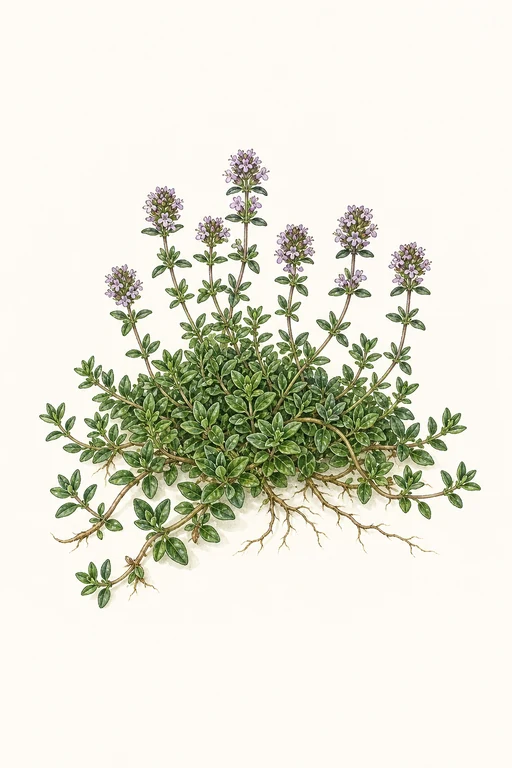
Creeping thyme drapes with a fragrant, mossy carpet—its tiny leaves release a bright, herbal perfume at the slightest touch.
At maturity, the foliage forms a low, spreading mat with a fine, velvety texture and a clean, savory flavor that shines in herb-forward blends. Ideal for fresh garnishing and for seasoning roasts, soups, and sauces where its aromatic character can perfume the whole dish.
Light: Full SunMaturity: 60 DaysHabit: Spreading
Location not set yet
Location not set yet
Enter your ZIP for local crop dates
Creeping Planting Dates by USDA Zone
Estimated US hardiness-zone windows for sow, transplant, and harvest. Enter a US ZIP above for exact local dates, or open a zone below.
| Zone | Start Indoors | Sow / Transplant | Harvest |
|---|---|---|---|
| Zone 1a | Protected Environment Only | ||
| Zone 1b | Direct Sow | Jun 1st | Jul 31st – Aug 1st |
| Zone 2a | Direct Sow | May 25th | Jul 24th – Aug 29th |
| Zone 2b | Direct Sow | May 15th | Jul 14th – Aug 25th |
| Zone 3a | Direct Sow | May 15th | Jul 14th – Sep 1st |
| Zone 3b | Direct Sow | May 19th | Jul 18th – Sep 21st |
| Zone 4a | Direct Sow | May 15th | Jul 14th – Sep 24th |
| Zone 4b | Direct Sow | May 13th | Jul 12th – Sep 27th |
| Zone 5a | Direct Sow | May 8th | Jul 7th – Sep 30th |
| Zone 5b | Direct Sow | May 4th | Jul 3rd – Oct 5th |
| Zone 6a | Direct Sow | May 1st | Jun 30th – Oct 10th |
| Zone 6b | Direct Sow | Apr 25th | Jun 24th – Oct 16th |
| Zone 7a | Direct Sow | Apr 20th | Jun 19th – Oct 20th |
| Zone 7b | Direct Sow | Apr 10th | Jun 9th – Oct 28th |
| Zone 8a | Direct Sow | Apr 1st | May 31st – Nov 5th |
| Zone 8b | Direct Sow | Mar 23rd | May 22nd – Nov 12th |
| Zone 9a | Direct Sow | Mar 6th | May 5th – Nov 26th |
| Zone 9b | Direct Sow | Feb 9th | Apr 10th – Dec 9th |
| Zone 10a | — | Oct 1st | Nov 30th – Feb 28th |
| Zone 10b | — | Oct 1st | Nov 30th – Feb 28th |
| Zone 11a | — | Oct 1st | Nov 30th – Feb 28th |
| Zone 11b | — | Oct 1st | Nov 30th – Feb 28th |
| Zone 12a | — | Oct 1st | Nov 30th – Feb 28th |
| Zone 12b | — | Oct 1st | Nov 30th – Feb 28th |
| Zone 13a | — | Oct 1st | Nov 30th – Feb 28th |
| Zone 13b | — | Oct 1st | Nov 30th – Feb 28th |
Crop Details
| Trait | Value |
|---|---|
| Days to Maturity | 60 |
| Sun Requirements | Full Sun |
| Growth Habit | Spreading |
| Support Needed | None |
| Planting Depth | Surface |
| Germination Temp (°F) | 65 |
| Min Soil Temp (°F) | 45 |
| Min Night Temp (°F) | 40 |
| Harden Off (days) | 7 |
Culinary Notes

Chef's Note
Creeping thyme has that telltale small-leaf intensity—bruised, it hits fast with a crisp, savory perfume. It’s particularly good when you want the herb’s brightness to ride the fat or reduction without turning twiggy or dull.

Best Uses
- bruise-and-sprinkle fresh thyme over roasted meats and blistered vegetables
- stir into slow-simmered stocks and broths for a clean aromatic lift
- infuse into pan sauces and reductions, then remove for a perfume not a bitterness
- fold chopped creeping thyme into compound butter for a low-key, fragrant melt

Flavor Profile

Frequently Asked Questions
What pest or disease most commonly affects creeping thyme (Thymus serpyllum), and how can I prevent it?
How often should I water creeping thyme during its main growing phase?
How do I tell when creeping thyme (Thymus serpyllum) is ready to harvest?
Sowing Tips

Transplant Conditions
Wait until soil reaches 45°F and nights stay above 40°F before moving outdoors. Harden off for 7 days first.
Expert Note

For fastest establishment, sow on the surface (light helps germination) and keep evenly moist until you see a mat forming, then let it dry down between waterings.