
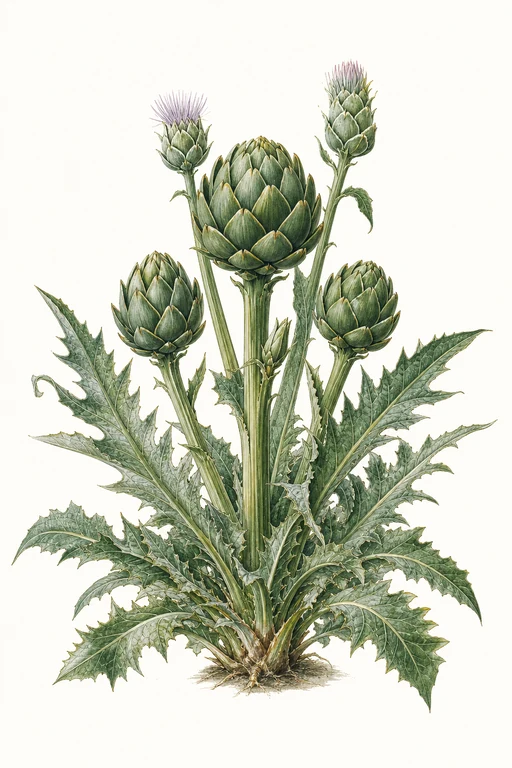
Cynara cardunculus var. scolymus
Velvety, deep-formed buds unfurl into a regal globe with tightly layered bracts—silken to the touch and richly aromatic at first glance.
Expect a tender, meaty heart and a pleasantly nutty, earthy flavor that shines in preparations where the whole globe becomes the centerpiece, from roasting to steaming and savory sauces. A classic Globe Artichoke for gardeners who love substantial, showy harvests and want their beds to look as impressive as they taste.
Light: Full SunMaturity: 180 DaysHabit: Clumping
Planting schedules and alerts are optimized for Columbus (Zone 6b).
Crop Dates
| Milestone | Date |
|---|---|
| Last Frost | Apr 25th |
| Growing Approach | Protected Environment Only |
Crop Details
| Trait | Value |
|---|---|
| Days to Maturity | 180 |
| Sun Requirements | Full Sun |
| Growth Habit | Clumping |
| Support Needed | None |
| Planting Depth | Normal |
| Germination Temp (°F) | 70 |
| Min Soil Temp (°F) | 50 |
| Min Night Temp (°F) | 40 |
| Harden Off (days) | 7 |
Culinary Notes

Chef's Note
This globe’s tight, layered bracts deliver that signature pull-apart, briny-meaty texture around a nutty heart—your job is to cook it until bitterness is polite, not gone. Treat it as the centerpiece: roast or braise, then finish with lemon-garlic fat so the aromatics and heart chew stay in the conversation.

Best Uses
- steam or braise whole globes until the bracts pull clean, then dip in garlicky mayo or browned butter
- roast halved artichokes until the edges go bronzed and crisp while the heart stays silky
- chop into thick savory sauces (with lemon and dairy) where it reduces into a hearty, spoonable texture
- shave or slice cooked hearts for hot pasta tosses where they cling instead of watering down

Flavor Profile

Frequently Asked Questions
What’s the most common disease to watch for on Cynara scolymus (artichoke) and how do I control it?
How often should I water Cynara scolymus during the main growing phase?
How can I tell when Cynara scolymus is ready to harvest?
Sowing Tips

Transplant Conditions
Wait until soil reaches 50°F and nights stay above 40°F before moving outdoors. Harden off for 7 days first.
Expert Note

Start plants early and keep them evenly moist; once established, cut back stems after harvest and mulch heavily for winter protection.