
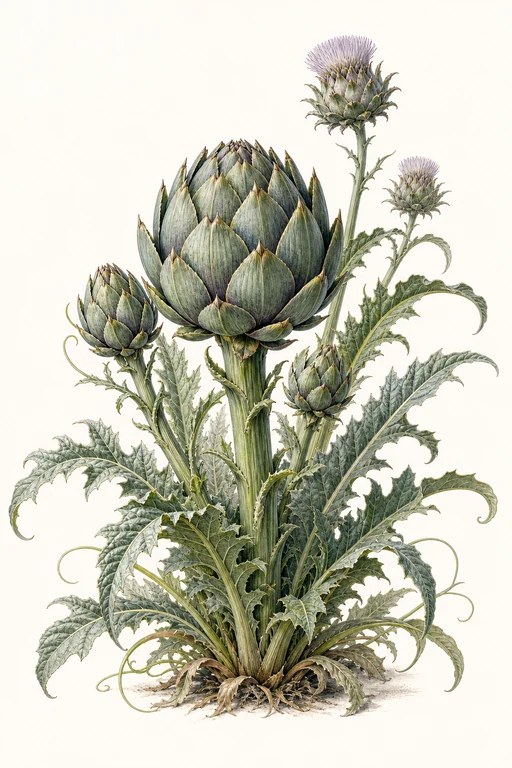
Cynara scolymus 'Italian'
Silvery, tightly cupped buds unfurl into a regal, nutty-sweet flavor with a tender, meaty heart and a crisp, satiny texture.
Cynara scolymus ‘Italian’ forms large, globe-shaped artichokes that roast beautifully, shine in warm sauces, and also lend themselves to pickling for a bright, tangy bite. A standout for gardeners who want bold, architectural plants and harvests that feel like a seasonal celebration.
Light: Full SunMaturity: 150 DaysHabit: Upright
Location not set yet
Location not set yet
Enter your ZIP for local crop dates
Cynara scolymus 'Italian' Planting Dates by USDA Zone
Estimated US hardiness-zone windows for sow, transplant, and harvest. Enter a US ZIP above for exact local dates, or open a zone below.
| Zone | Start Indoors | Sow / Transplant | Harvest |
|---|---|---|---|
| Zone 1a | Protected Environment Only | ||
| Zone 1b | Protected Environment Only | ||
| Zone 2a | Protected Environment Only | ||
| Zone 2b | Protected Environment Only | ||
| Zone 3a | Protected Environment Only | ||
| Zone 3b | Protected Environment Only | ||
| Zone 4a | Protected Environment Only | ||
| Zone 4b | Protected Environment Only | ||
| Zone 5a | Protected Environment Only | ||
| Zone 5b | Jan 26th | May 4th | Oct 1st – Oct 5th |
| Zone 6a | Jan 23rd | May 1st | Sep 28th – Oct 10th |
| Zone 6b | Jan 17th | Apr 25th | Sep 22nd – Oct 16th |
| Zone 7a | Jan 12th | Apr 20th | Sep 17th – Oct 20th |
| Zone 7b | Jan 2nd | Apr 10th | Sep 7th – Oct 28th |
| Zone 8a | Dec 24th | Apr 1st | Aug 29th – Nov 5th |
| Zone 8b | Dec 15th | Mar 23rd | Aug 20th – Nov 12th |
| Zone 9a | Nov 28th | Mar 6th | Aug 3rd – Nov 26th |
| Zone 9b | Nov 3rd | Feb 9th | Jul 9th – Dec 9th |
| Zone 10a | — | Oct 1st | Feb 28th – Feb 28th |
| Zone 10b | — | Oct 1st | Feb 28th – Feb 28th |
| Zone 11a | — | Oct 1st | Feb 28th – Feb 28th |
| Zone 11b | — | Oct 1st | Feb 28th – Feb 28th |
| Zone 12a | — | Oct 1st | Feb 28th – Feb 28th |
| Zone 12b | — | Oct 1st | Feb 28th – Feb 28th |
| Zone 13a | — | Oct 1st | Feb 28th – Feb 28th |
| Zone 13b | — | Oct 1st | Feb 28th – Feb 28th |
Crop Details
| Trait | Value |
|---|---|
| Days to Maturity | 150 |
| Sun Requirements | Full Sun |
| Growth Habit | Upright |
| Support Needed | None |
| Planting Depth | Normal |
| Germination Temp (°F) | 70 |
| Min Soil Temp (°F) | 45 |
| Min Night Temp (°F) | 50 |
| Harden Off (days) | 7 |
Culinary Notes

Chef's Note
This ‘Italian’ globe artichoke leans into a nutty-sweet roastiness with a meaty heart that stays satisfyingly intact instead of going hollow. It’s built for high-heat browning or a warm, lemony glaze—once the leaves crisp and the center turns creamy, it eats like a centerpiece.

Best Uses
- hot roasting until the tips char and the hearts turn creamy
- warm, lemony olive-oil sauces (or reduced pan sauces) to glaze the leaf
- braising or stewing with garlic and salty elements for a silky texture
- quick pickling for a bright, tangy crunch

Flavor Profile

Frequently Asked Questions
What pest or disease most commonly affects Cynara scolymus (artichokes), and what should I do?
How often should I water Italian artichokes during peak growth, and what soil moisture level do they need?
How can I tell when Italian artichokes are ready to harvest?
Sowing Tips

Transplant Conditions
Wait until soil reaches 45°F and nights stay above 50°F before moving outdoors. Harden off for 7 days first.
Expert Note

Globe artichokes are long-lived and slow to establish—start early indoors and transplant only when nights are reliably mild, then mulch heavily to protect crowns.