
Dagan Brussels Sprout
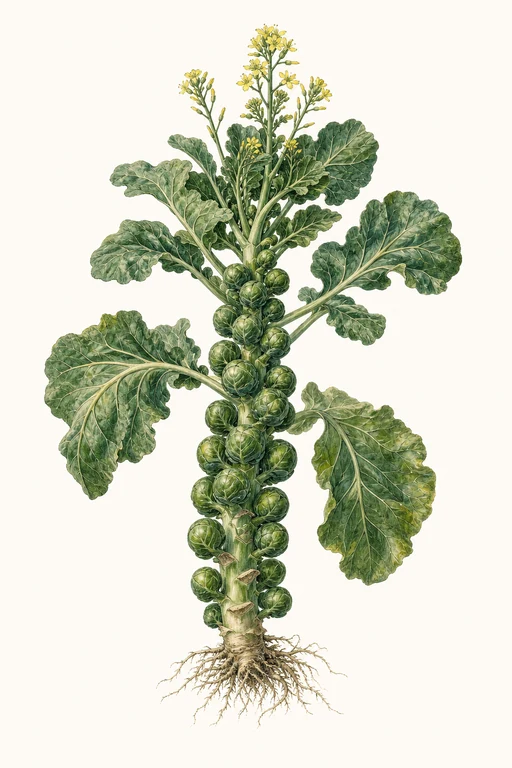
Sweet, nutty sprouts emerge in tight, uniform crowns with a velvety, cabbage-green sheen—so vivid they feel almost luminous in the garden.
Dagan Brussels Sprout forms compact heads along sturdy stalks, delivering a tender bite and a mellow depth that shines in roasting and pan-searing, as well as in hearty braises and savory sauces. Grow for reliable, market-ready harvests beginning around 85 days, when the flavor turns especially rich after cool weather.
Light: Full SunMaturity: 85 DaysHabit: Upright
Planting schedules and alerts are optimized for Columbus (Zone 6b).
Crop Dates
| Milestone | Date |
|---|---|
| Start Indoors | Mar 28th |
| Last Frost | Apr 25th |
| Transplant / Sow Outdoors | Apr 25th |
| Harvest Begins | Jul 19th |
| Harvest Ends | Oct 16th |
Crop Details
| Trait | Value |
|---|---|
| Days to Maturity | 85 |
| Sun Requirements | Full Sun |
| Growth Habit | Upright |
| Support Needed | None |
| Planting Depth | Normal |
| Germination Temp (°F) | 70 |
| Min Soil Temp (°F) | 40 |
| Min Night Temp (°F) | 32 |
| Harden Off (days) | 6 |
Culinary Notes

Chef's Note
Dagan’s tight, uniform sprouts cook evenly, so you get browned outer leaves without the center turning mushy. Their sweet-nutty, mellow brassica character loves high-heat caramelization and fats that carry browned flavors—think pancetta, browned butter, and a squeeze of lemon to snap the whole thing awake.

Best Uses
- hot roasting until browned and crisp at the edges
- pan-searing with a cut-side kiss for fond and nutty caramel notes
- braising in stock to turn the centers silky
- tossing into thick savory sauces where they hold their texture

Flavor Profile

Frequently Asked Questions
What pest or disease most commonly affects Brassica oleracea var. gemmifera (Brussels sprouts), and how can I manage it at home?
How often should I water Brussels sprouts during the main growing phase, and what soil moisture level should I aim for?
How can I tell when Brassica oleracea var. gemmifera is ready to harvest?
Sowing Tips

Transplant Conditions
Wait until soil reaches 40°F and nights stay above 32°F before moving outdoors. Harden off for 6 days first.
Expert Note

For the tightest “buttons,” keep soil evenly moist and aim to transplant into cool weather so plants don’t race ahead of head/btn development.