
Danvers Half Long
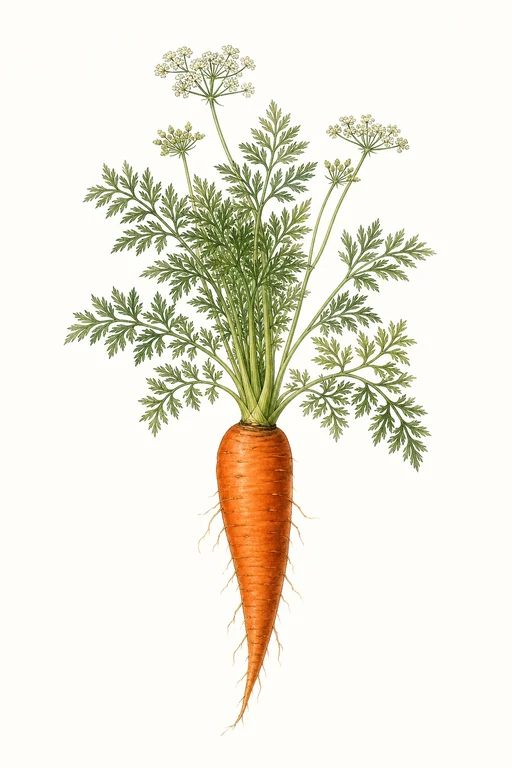
Sweet, earthy-sweet fragrance rises as you pull Danvers Half Long—its roots are long and elegantly tapered, with a smooth, crisp texture that feels almost polished in the hand.
Deep orange flesh holds a tender bite and dependable uniformity, making it a standout for roasting trays, fresh crunch, and vibrant sauces that glow with color. A classic Danvers profile for gardeners who want reliable performance and a harvest that looks as good as it tastes at the table.
Light: Full SunMaturity: 75 DaysHabit: Taproot
Crop Dates : 8a
| Milestone | Date |
|---|---|
| Start Indoors | Direct Sow |
| Last Frost | Apr 1st |
| Transplant / Sow Outdoors | Apr 1st |
| Harvest Begins | Jun 15th |
| Harvest Ends | Nov 5th |
Crop Details
| Trait | Value |
|---|---|
| Days to Maturity | 75 |
| Sun Requirements | Full Sun |
| Growth Habit | Taproot |
| Support Needed | None |
| Planting Depth | Surface |
| Germination Temp (°F) | 55 |
| Min Soil Temp (°F) | 40 |
| Min Night Temp (°F) | 28 |
| Harden Off (days) | Not Required |
Culinary Notes

Chef's Note
Danvers Half Long earns its seat by giving you a polished, uniformly crisp bite—ideal for roasting where it caramelizes without turning mealy. Its sweet-earth profile plays best with warm spice (ginger/cumin) or bright acid (lemon) to keep the flavor singing, not flat.

Best Uses
- roasting on high heat so the edges caramelize while the centers stay crisp-tender
- shredding for slaws where the strands stay springy under dressing
- quick glazing or honey-buttering to highlight natural sugars
- blending into a smooth, silky orange puree or vibrant soup foundation

Flavor Profile

Frequently Asked Questions
What pest or disease most commonly affects Daucus carota var. sativus (carrot) and how do I control it at home?
How often should I water Danvers Half Long carrots during the 60–75 day root-filling phase?
How can I tell when Daucus carota var. sativus (Danvers Half Long) is ready to harvest?
Sowing Tips

Transplant Conditions
Wait until soil reaches 40°F and nights stay above 28°F before moving outdoors.
Expert Note

Sow shallow in cool weather and keep the top layer consistently moist until emergence to prevent misshapen roots.