
Darkmar 21
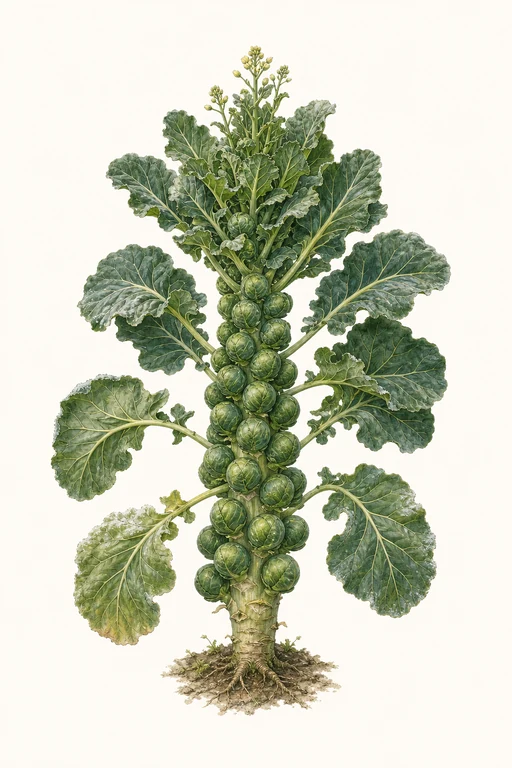
Sink your senses into Darkmar 21’s deep, velvety sprouts—cool-toned and richly colored, with a tight, satisfying firmness that promises a sweet, mellow character as the season turns.
Expect compact heads that hold their form, offering a dense bite and a beautifully uniform look from the lower tiers to the crown. Ideal for roasting and hearty pan preparations, Darkmar 21 also shines in braises and savory sauces where its flavor can fully develop.
Light: Full SunMaturity: 85 DaysHabit: Upright
Planting schedules and alerts are optimized for Columbus (Zone 6b).
Crop Dates
| Milestone | Date |
|---|---|
| Start Indoors | Mar 28th |
| Last Frost | Apr 25th |
| Transplant / Sow Outdoors | Apr 18th |
| Harvest Begins | Jul 12th |
| Harvest Ends | Oct 16th |
Crop Details
| Trait | Value |
|---|---|
| Days to Maturity | 85 |
| Sun Requirements | Full Sun |
| Growth Habit | Upright |
| Support Needed | None |
| Planting Depth | Normal |
| Germination Temp (°F) | 45 |
| Min Soil Temp (°F) | 40 |
| Min Night Temp (°F) | 30 |
| Harden Off (days) | 6 |
Culinary Notes

Chef's Note
Darkmar 21’s compact, velvety sprouts are built for heat—get them browned hard and they turn sweet and nutty instead of harsh. Cook them in fat (brown butter, bacon) and finish with sharp acid so the flavor stays clean and the bite stays satisfying.

Best Uses
- high-heat roasting until edges go crisp and caramel-dark
- shaving or halving for a hot pan sear with butter and a splash of vinegar
- braises where the sprouts soften into silky-but-not-mushy layers
- tossing into savory pan sauces (reduction or velouté style) for a thick, clinging finish

Flavor Profile

Frequently Asked Questions
What pest or disease is most likely on Brassica oleracea (e.g., cabbage/broccoli type) and how can I stop it?
How often should I water Brassica oleracea during the main growing phase?
How do I tell when my Brassica oleracea is ready to harvest?
Sowing Tips

Transplant Conditions
Wait until soil reaches 40°F and nights stay above 30°F before moving outdoors. Harden off for 6 days first.
Expert Note

For the sweetest sprouts, keep plants growing steadily and let light frosts do the flavor work—avoid heat waves and sudden drought stress.