
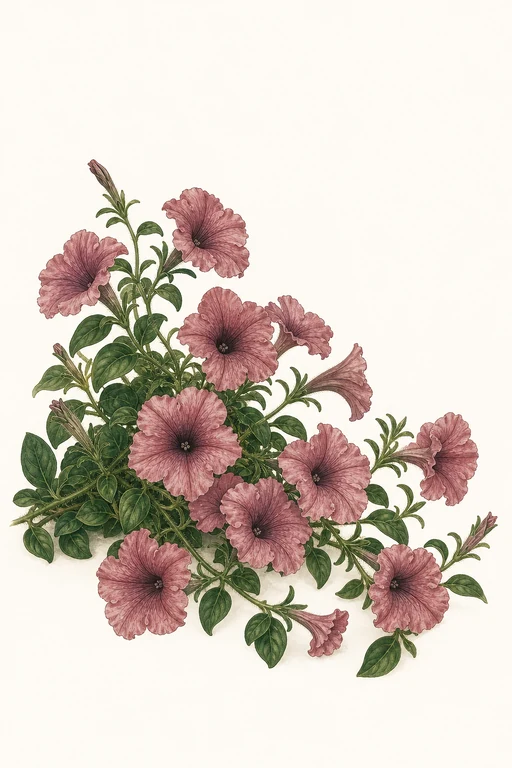
Debonair Dusty Rose
Velvety petals bloom in a misty, dusty-rose haze, as if soft watercolor has been brushed across each flower.
Debonair Dusty Rose trails with a graceful, spreading habit, producing an abundance of blooms with a gently ruffled texture that catches the light from every angle. Ideal for hanging baskets and containers, it shines as a long-season ornamental—thriving in sunny spots and rewarding you with a steady parade of showy color.
Light: Full SunMaturity: 70 DaysHabit: Spreading
Showing planting schedules for Zone 6a. We detect Columbus (Zone 6b).
Crop Dates
| Milestone | Date |
|---|---|
| Start Indoors | Feb 20th |
| Last Frost | May 1st |
| Transplant / Sow Outdoors | May 1st |
| Harvest Begins | Jul 10th |
| Harvest Ends | Oct 10th |
Crop Details
| Trait | Value |
|---|---|
| Days to Maturity | 70 |
| Sun Requirements | Full Sun |
| Growth Habit | Spreading |
| Support Needed | None |
| Planting Depth | Surface |
| Germination Temp (°F) | 70 |
| Min Soil Temp (°F) | 50 |
| Min Night Temp (°F) | 50 |
| Harden Off (days) | 7 |
Culinary Notes

Chef's Note
Debonair Dusty Rose reads more like a perfumed garnish than a hearty edible: use the petals cold or barely treated so their sweet, faintly floral flavor doesn’t flatten or turn bitter. Because they’re tender, they’re best when you want texture at the edges—on top, not cooked down for long.

Best Uses
- floating raw petals on cold drinks like spritzes or lemonade
- topping fresh salads where the petals stay visually intact
- folding into whipped cream or yogurt for a gentle floral perfume
- quick-pickling or candying petals for garnish

Flavor Profile

Kitchen Pairings
Frequently Asked Questions
What pest or disease most commonly affects Petunia × atkinsiana, and how can I treat it at home?
How often should I water Petunia × atkinsiana during its main growing phase?
How do I know when Petunia × atkinsiana is ready to harvest?
Sowing Tips

Transplant Conditions
Wait until soil reaches 50°F and nights stay above 50°F before moving outdoors. Harden off for 7 days first.
Expert Note

For best early vigor, start petunia seeds indoors under bright light and transplant only after nights are reliably warm (they’re frost-sensitive).