
Dino Kale
Meet Dino Kale for its bold, sculptural leaves and deeply satisfying bite—an unmistakably hearty green with a rich, savory character that holds its own from first harvest to late-season abundance.
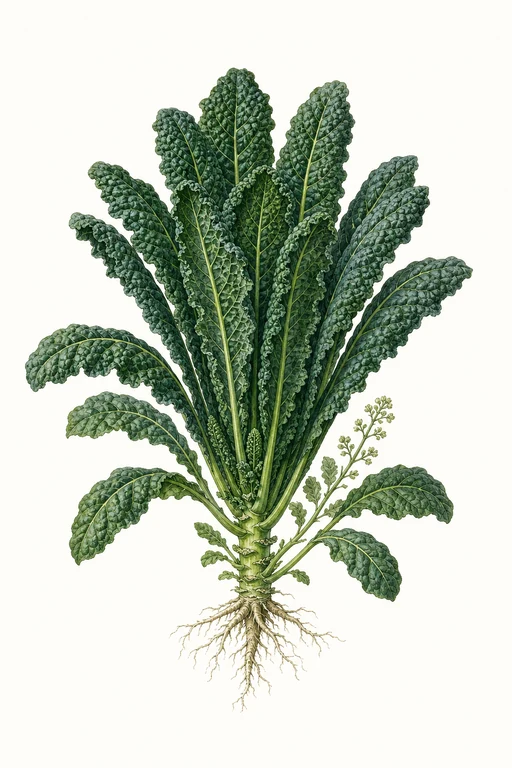
The foliage forms dense, upright rosettes with thick, blistered texture and a softly ruffled edge, making every gathering feel like pulling from a living garden centerpiece. Dino Kale shines in robust, warming preparations and also delivers beautifully in fresh salads when you want greens with real substance.
Light: Full SunMaturity: 60 DaysHabit: Rosette
Planting schedules and alerts are optimized for Columbus (Zone 6b).
Crop Dates
| Milestone | Date |
|---|---|
| Start Indoors | Mar 28th |
| Last Frost | Apr 25th |
| Transplant / Sow Outdoors | Apr 18th |
| Harvest Begins | Jun 17th |
| Harvest Ends | Oct 16th |
Crop Details
| Trait | Value |
|---|---|
| Days to Maturity | 60 |
| Sun Requirements | Full Sun |
| Growth Habit | Rosette |
| Support Needed | None |
| Planting Depth | Normal |
| Germination Temp (°F) | 45 |
| Min Soil Temp (°F) | 40 |
| Min Night Temp (°F) | 28 |
| Harden Off (days) | 6 |
Culinary Notes

Chef's Note
Dino Kale’s thick, blistered leaf has the kind of chew that stands up to heat and doesn’t turn to sad wilt—so you can treat it like a main green, not just a garnish. It’s built for braises, roasts, and cheese-heavy finishes where the cabbagey sweetness shows up after the bite is tamed by fat and salt.

Best Uses
- massaged raw kale salads that need a tough green
- braised or sheet-pan roasted kale with a glossy fat-and-acid finish
- cream or cheese-forward gratins where the leaf stays toothy
- quick sauté with a salty component, then dressed hot

Flavor Profile

Frequently Asked Questions
What pest or disease most often hits Brassica oleracea (Dino kale), and how can I fix it?
How often should I water Dino kale during the main growing phase?
How do I know when Dino kale (Brassica oleracea) is ready to harvest?
Sowing Tips

Transplant Conditions
Wait until soil reaches 40°F and nights stay above 28°F before moving outdoors. Harden off for 6 days first.
Expert Note

For the sweetest flavor, grow kale in cool weather and avoid letting seedlings get rootbound before transplanting.