
Dutch Blue Pea
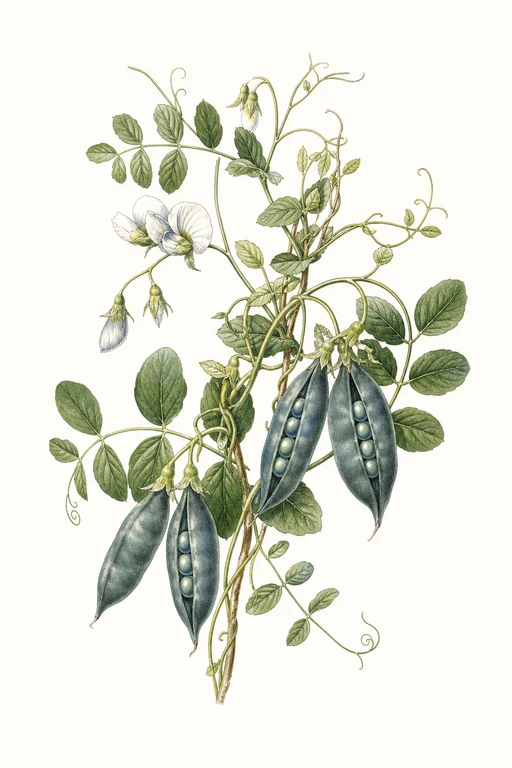
Sweet, cool-scented pods give way to peas of a true Dutch Blue—strikingly blue-green kernels that burst with tender, garden-fresh flavor.
The plants form a steady, productive harvest with plump, shelling-ready peas and a delicate, buttery texture that shines in simple preparations. Dutch Blue Pea is a home-garden favorite for stocking the pantry with vibrant color and classic shelling-pea performance at about 65 days.
Light: Full SunMaturity: 65 DaysHabit: Clumping
Crop Dates : 6b
| Milestone | Date |
|---|---|
| Start Indoors | Direct Sow |
| Last Frost | Apr 25th |
| Transplant / Sow Outdoors | Apr 25th |
| Harvest Begins | Jun 29th |
| Harvest Ends | Oct 16th |
Crop Details
| Trait | Value |
|---|---|
| Days to Maturity | 65 |
| Sun Requirements | Full Sun |
| Growth Habit | Clumping |
| Support Needed | Trellis |
| Planting Depth | Normal |
| Germination Temp (°F) | 45 |
| Min Soil Temp (°F) | 40 |
| Min Night Temp (°F) | 28 |
| Harden Off (days) | Not Required |
Culinary Notes

Chef's Note
Dutch Blue’s hallmark is that true pea sweetness plus a buttery tenderness that doesn’t need much heat or fuss—overcook it and the kernels turn dull. Treat it like a timing crop: short cook, glossy fat (butter or crème fraîche), and a bright finish (lemon) to keep the flavor electric.

Best Uses
- quick-boil and butter-glaze so they stay plump and vivid
- shuck-to-pan sauté with garlic and a splash of pasta water for a glossy coating
- fold into risotto or creamy polenta at the last moment for tender bursts
- blend into a thin pea soup or purée—then finish with butter and lemon for clarity

Flavor Profile

Frequently Asked Questions
What is the most common disease pest problem for Pisum sativum (blue-podded peas) and how do I manage it?
How often should I water Dutch Blue peas during the main growing phase (pods filling)?
How can I tell when Dutch Blue peas are ready to harvest?
Sowing Tips

Transplant Conditions
Wait until soil reaches 40°F and nights stay above 28°F before moving outdoors.
Expert Note

Sow as soon as the soil can be worked and keep rows evenly moist early—peas establish fastest in cool weather and won’t like root disturbance.