
Dwarf Greek Basil
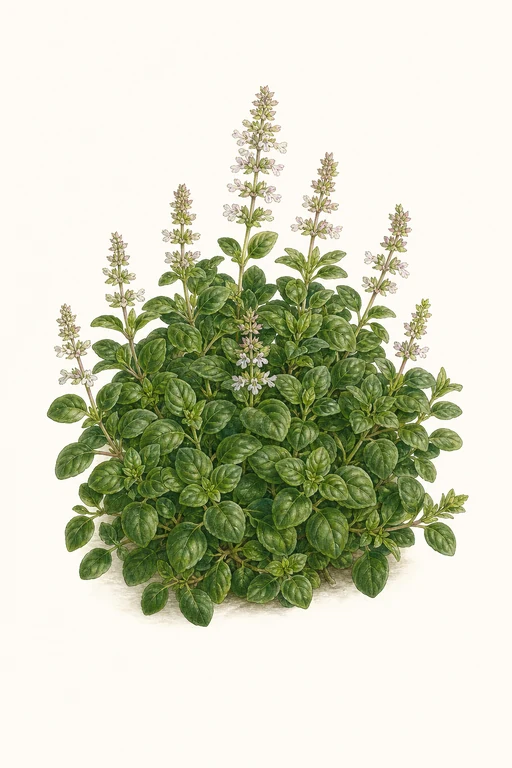
Fragrant as a sunlit herb garden, Dwarf Greek Basil forms a compact, mound-like plant that releases a bright, sweet-anise perfume with every touch.
Its small, tender leaves are richly aromatic and velvety in texture, holding their character beautifully for fresh garnishing and aromatic use in sauces, pesto-style blends, and herb oils. Grow it for quick, satisfying harvests—ideal when you want bold basil flavor in a neat, space-saving bush.
Light: Full SunMaturity: 45 DaysHabit: Bush
Crop Dates : 6a
| Milestone | Date |
|---|---|
| Start Indoors | Mar 20th |
| Last Frost | May 1st |
| Transplant / Sow Outdoors | Jun 12th |
| Harvest Begins | Jul 27th |
| Harvest Ends | Oct 10th |
Crop Details
| Trait | Value |
|---|---|
| Days to Maturity | 45 |
| Sun Requirements | Full Sun |
| Growth Habit | Bush |
| Support Needed | None |
| Planting Depth | Normal |
| Germination Temp (°F) | 70 |
| Min Soil Temp (°F) | 60 |
| Min Night Temp (°F) | 50 |
| Harden Off (days) | 10 |
Culinary Notes

Chef's Note
Dwarf Greek Basil is all about aroma and delicate texture: its small leaves stay tender and fragrant, so it shines as a finishing herb rather than a long-cooked one. Use it off-heat in sauces or blitz it for pesto-style blends where that sweet-anise perfume can really sit on the tongue.

Best Uses
- fresh torn-leaf garnishes on hot dishes (it won’t turn stringy like larger-leaf types)
- pesto-style blends where you want a fragrant, intensely perfumed green
- quick herb oils/compound butters (stays vivid and aromatic without needing heavy cooking)
- finishing sauces—stir in off-heat to preserve the perfume

Flavor Profile

Frequently Asked Questions
What pest or disease is most likely on Ocimum basilicum (dwarf Greek basil), and how can I treat it?
How often should I water Ocimum basilicum during the main growing phase?
How can I tell when dwarf Greek basil (Ocimum basilicum) is ready to harvest?
Sowing Tips

Transplant Conditions
Wait until soil reaches 60°F and nights stay above 50°F before moving outdoors. Harden off for 10 days first.
Expert Note

Start basil indoors early but transplant only after nights are reliably warm, then pinch the tips weekly to keep the dwarf habit compact and productive.