
Dwarf Long Pod Green
Tender pods arrive with a vivid, fresh green sheen—crisp to the touch and wonderfully mild in flavor.
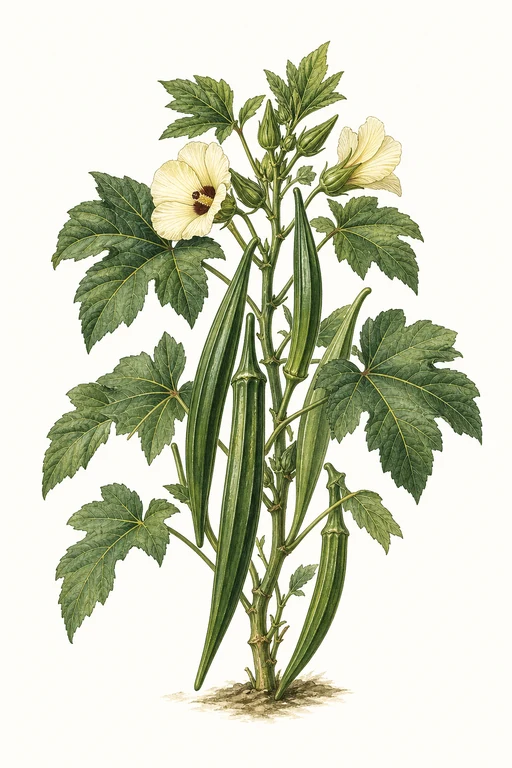
Dwarf Long Pod Green produces straight, elongated pods on a compact plant, making it ideal for gardeners who want abundant harvests without sprawling growth. Enjoy these pods at their best for quick sautéing, roasting, and pickling, or for fresh use in vibrant, garden-forward dishes.
Light: Full SunMaturity: 55 DaysHabit: Upright
Planting schedules and alerts are optimized for Columbus (Zone 6b).
Crop Dates
| Milestone | Date |
|---|---|
| Start Indoors | Direct Sow |
| Last Frost | Apr 25th |
| Transplant / Sow Outdoors | Jun 6th |
| Harvest Begins | Jul 31st |
| Harvest Ends | Oct 16th |
Crop Details
| Trait | Value |
|---|---|
| Days to Maturity | 55 |
| Sun Requirements | Full Sun |
| Growth Habit | Upright |
| Support Needed | None |
| Planting Depth | Normal |
| Germination Temp (°F) | 75 |
| Min Soil Temp (°F) | 65 |
| Min Night Temp (°F) | 55 |
| Harden Off (days) | 10 |
Culinary Notes

Chef's Note
Dwarf Long Pod Green gives you the okra experience without the chewy letdown—these pods stay crisp-to-tender when you keep cook time tight. It’s ideal when you want that light viscosity to help seasonings and coatings cling, especially with acid-forward flavors like lemon or vinegar.

Best Uses
- hot quick sauté in a thin film of oil—fast char edges while keeping pods snappy
- roasting on high heat until the exterior browns and the center stays tender
- quick pickle batches for tangy, crisp “refrigerator” style slices
- frying/cornmeal dredges where the pod’s natural viscosity helps lightly cling to coating

Flavor Profile

Frequently Asked Questions
What pests or diseases most commonly affect Abelmoschus esculentus (okra), and how can I control them at home?
How often should I water okra during the main growing phase, and what soil moisture level does it need?
How do I know when to harvest Dwarf Long Pod Green okra (Abelmoschus esculentus)?
Sowing Tips

Transplant Conditions
Wait until soil reaches 65°F and nights stay above 55°F before moving outdoors. Harden off for 10 days first.

Direct Sow Preferred
Sensitive roots — does not transplant well. If starting indoors, use biodegradable pots and disturb roots as little as possible when moving outdoors.
Expert Note

Sow directly after the last spring frost once soil warms, keeping moisture steady until emergence for best pod set.