
Early Half
Sweet, nutty sprouts emerge in a tidy, early rhythm—dense little globes with a gentle, cabbage-scented perfume and a crisp, tender bite.
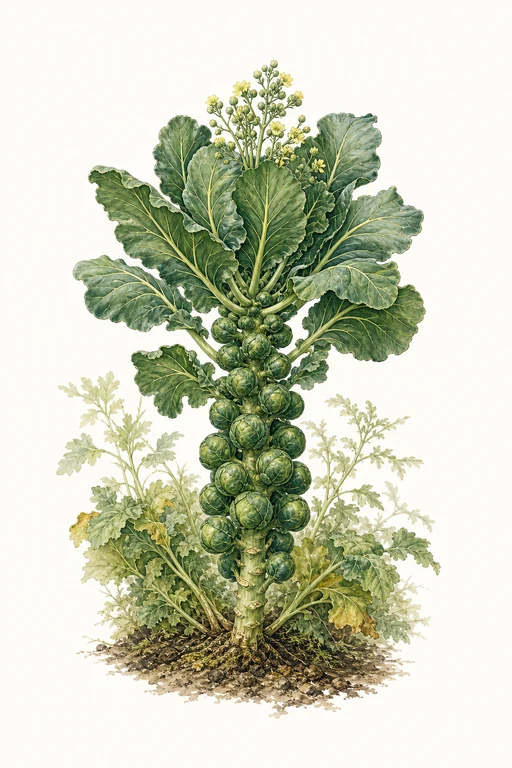
“Early Half” forms a compact, upright stalk that rewards home gardeners with uniform heads for roasting, steaming, and savory skillet-style sides, plus beautiful results in hearty autumn sauces. For fall tables and freezer-friendly batches, these sprouts bring reliable texture and a pleasantly mellow flavor at just 75 days.
Light: Full SunMaturity: 75 DaysHabit: Upright
Planting schedules and alerts are optimized for Columbus (Zone 6b).
Crop Dates
| Milestone | Date |
|---|---|
| Start Indoors | Mar 28th |
| Last Frost | Apr 25th |
| Transplant / Sow Outdoors | Apr 18th |
| Harvest Begins | Jul 2nd |
| Harvest Ends | Oct 16th |
Crop Details
| Trait | Value |
|---|---|
| Days to Maturity | 75 |
| Sun Requirements | Full Sun |
| Growth Habit | Upright |
| Support Needed | None |
| Planting Depth | Normal |
| Germination Temp (°F) | 45 |
| Min Soil Temp (°F) | 40 |
| Min Night Temp (°F) | 35 |
| Harden Off (days) | 6 |
Culinary Notes

Chef's Note
Early Half aims for a tidy, early rhythm—its sprouts tend to arrive sweet and nutty with a crisp-tender snap, so they roast beautifully without collapsing. Go hot and fast: you want browned cut faces and that gentle cabbage scent, then finish with lemony brightness or butter-mustard richness.

Best Uses
- high-heat roasting until the cut faces bronze and go lightly caramel-sweet
- quick steam then finish in a hot skillet for a crisp-tender ring
- shredded or halved for autumn pasta and savory braises where they hold texture
- freezer-friendly batch-cook: roast or blanch first, then reheat fast without turning mushy

Flavor Profile

Frequently Asked Questions
Early Half (Brassica oleracea): what’s the most common disease/pest issue and how do I treat it?
How often should I water Early Half during the main growing phase (days ~20–60)?
How can I tell when Early Half (Brassica oleracea) is ready to harvest at ~75 days?
Sowing Tips

Transplant Conditions
Wait until soil reaches 40°F and nights stay above 35°F before moving outdoors. Harden off for 6 days first.
Expert Note

For best sweetness and compact heads, keep plants evenly moist and avoid heat stress—brussels sprout “sweetness” improves after cool weather starts.