
Early Jersey Wakefield
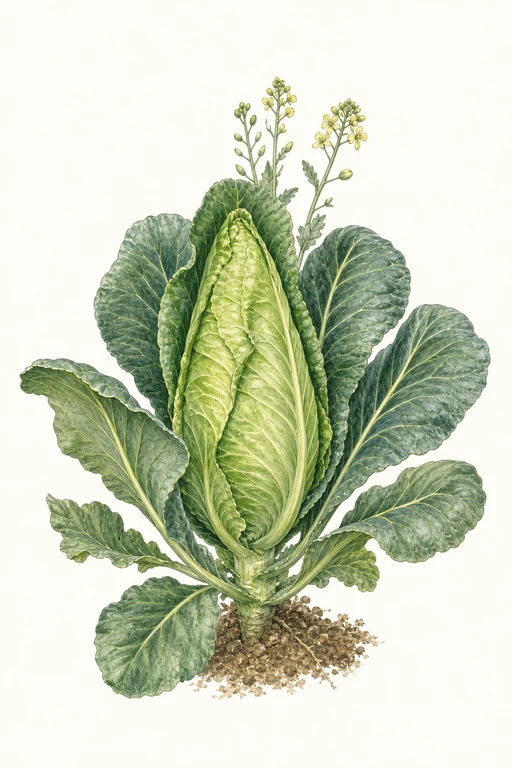
Sweetly crisp and cool to the senses, Early Jersey Wakefield forms compact, medium-sized heads with a tender, pale-green interior and a gently sweet, cabbage-forward flavor.
The leaves are finely textured and tightly layered, creating a satisfying crunch that holds beautifully from garden to table. Ideal for early-season harvests, it shines in fresh salads, slaws, and quick pickling, and it also roasts up with a mellow, comforting sweetness.
Light: Full SunMaturity: 60 DaysHabit: Rosette
Crop Dates : 4a
| Milestone | Date |
|---|---|
| Start Indoors | Apr 17th |
| Last Frost | May 15th |
| Transplant / Sow Outdoors | May 8th |
| Harvest Begins | Jul 7th |
| Harvest Ends | Sep 24th |
Crop Details
| Trait | Value |
|---|---|
| Days to Maturity | 60 |
| Sun Requirements | Full Sun |
| Growth Habit | Rosette |
| Support Needed | None |
| Planting Depth | Normal |
| Germination Temp (°F) | 75 |
| Min Soil Temp (°F) | 45 |
| Min Night Temp (°F) | 35 |
| Harden Off (days) | 6 |
Culinary Notes

Chef's Note
Early Jersey Wakefield is built for the moment when you want cabbage flavor without harshness—compact heads that shred clean and crunch like they mean it. Slice it thin for slaw or pickle it quickly; it keeps a pleasant snap while cooking shifts the sweetness from raw bite into mellow, roasty comfort.

Best Uses
- thin-sliced coleslaw that stays crisp under a creamy or vinaigrette-based dressing
- quick pickling for tangy, still-crunchy cabbage bites
- shredded into fresh salads for a cool, clean crunch
- roasting or pan-searing until edges caramelize and the center goes pleasantly sweet

Flavor Profile

Frequently Asked Questions
What pest or disease commonly affects Brassica oleracea var. capitata (Early Jersey Wakefield cabbage), and how do I control it?
How often should I water Early Jersey Wakefield cabbage during peak growth, and what soil moisture target should I maintain?
How can I tell when Early Jersey Wakefield cabbage is ready to harvest?
Sowing Tips

Transplant Conditions
Wait until soil reaches 45°F and nights stay above 35°F before moving outdoors. Harden off for 6 days first.
Expert Note

Start indoors for steady early head formation, then transplant right around last frost into cool weather for compact, split-resistant heads.