
Ewell
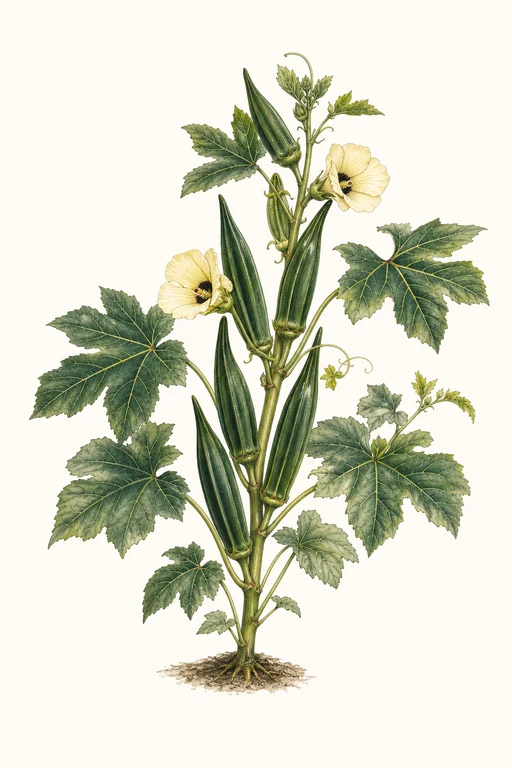
Silky, tender pods arrive with a lush, garden-fresh snap and a deep green sheen that looks as good as it tastes.
Ewell okra develops slender, well-filled pods that stay pleasantly crisp for longer harvest windows, making it a standout for roasting and skillet favorites, as well as silky sauces and quick pickles. Grow Ewell for a steady rhythm of production—an elegant, edible ornament that rewards attentive gardeners with consistently flavorful pods from mid-summer into fall.
Light: Full SunMaturity: 58 DaysHabit: Upright
Planting schedules and alerts are optimized for Columbus (Zone 6b).
Crop Dates
| Milestone | Date |
|---|---|
| Start Indoors | Mar 14th |
| Last Frost | Apr 25th |
| Transplant / Sow Outdoors | Jun 20th |
| Harvest Begins | Aug 17th |
| Harvest Ends | Oct 16th |
Crop Details
| Trait | Value |
|---|---|
| Days to Maturity | 58 |
| Sun Requirements | Full Sun |
| Growth Habit | Upright |
| Support Needed | None |
| Planting Depth | Normal |
| Germination Temp (°F) | 80 |
| Min Soil Temp (°F) | 65 |
| Min Night Temp (°F) | 55 |
| Harden Off (days) | 10 |
Culinary Notes

Chef's Note
Ewell’s slender, well-filled pods cook into that classic okra magic—slick, spoon-coating texture without turning mushy too fast. It’s ideal when you want the mucilage to work for you: sear hard, pickle quick, or reduce into a sauce that clings.

Best Uses
- high-heat skillet searing for a crisp-edged exterior with tender interiors
- quick pickles that stay snappy and bright
- roasted okra with a lacquered, glossy coating
- silky gumbo-style or spoon-thick pan sauces where the mucilage matters

Flavor Profile

Frequently Asked Questions
What pest or disease is most common on Abelmoschus esculentus (okra), and how do I fix it?
How often should I water okra during the main growing phase (after it starts growing fast)?
How can I tell when okra pods (Abelmoschus esculentus) are ready to harvest?
Sowing Tips

Transplant Conditions
Wait until soil reaches 65°F and nights stay above 55°F before moving outdoors. Harden off for 10 days first.
Expert Note

Because Ewell is a cucurbit with a delicate root system, start it outdoors after the soil warms (or use very careful transplanting) and harvest frequently to keep the pods tender.