
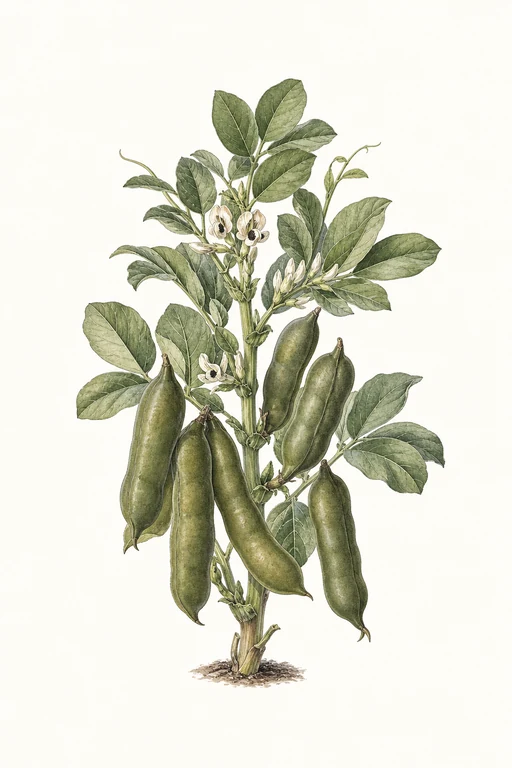
Fava Bean 'Hitchcock'
Sweet, buttery pods open to reveal plump, ivory-green beans with a gentle, garden-fresh fragrance and a tender, creamy bite.
Fava Bean ‘Hitchcock’ forms sturdy, upright plants that hold their crop beautifully, making it a delight to grow and a standout for fresh, silky preparations, as well as hearty purées and spoonable spreads. Expect a smooth texture and a mellow, nutty flavor that shines whether served straight from the garden or folded into classic bean-forward dishes.
Light: Full SunMaturity: 60 DaysHabit: Upright
Planting schedules and alerts are optimized for Columbus (Zone 6b).
Crop Dates
| Milestone | Date |
|---|---|
| Start Indoors | Direct Sow |
| Last Frost | Apr 25th |
| Transplant / Sow Outdoors | Apr 25th |
| Harvest Begins | Jun 24th |
| Harvest Ends | Oct 16th |
Crop Details
| Trait | Value |
|---|---|
| Days to Maturity | 60 |
| Sun Requirements | Full Sun |
| Growth Habit | Upright |
| Support Needed | None |
| Planting Depth | Normal |
| Germination Temp (°F) | 50 |
| Min Soil Temp (°F) | 40 |
| Min Night Temp (°F) | 28 |
| Harden Off (days) | Not Required |
Culinary Notes

Chef's Note
‘Hitchcock’ favas lean sweet and buttery with that creamy, spoon-ready texture once the beans are cooked and peeled. They’re built for minimal heat—get them just tender so the nutty flavor stays bright, not starchy, and let lemon, olive oil, and butter do the heavy lifting.

Best Uses
- briefly blanched and served with olive oil and flaky salt
- quick-sautéed with garlic and butter until just tender
- puréed into a spoonable fava spread or dip (with a little lemon)
- folded into pasta as a silky, starchy sauce base

Flavor Profile

Frequently Asked Questions
What pest or disease commonly affects Vicia faba (fava beans), and how can I manage it?
How often should I water Vicia faba during the main growing phase?
How do I know when Vicia faba (fava beans) are ready to harvest?
Sowing Tips

Transplant Conditions
Wait until soil reaches 40°F and nights stay above 28°F before moving outdoors.
Expert Note

For best performance, sow fava beans in cool weather and keep soil evenly moist until emergence.