
Flash Collards
Sink your senses into Flash Collards’ crisp, cool-green leaves—tender yet substantial, with a lively snap and a gently sweet, savory depth.
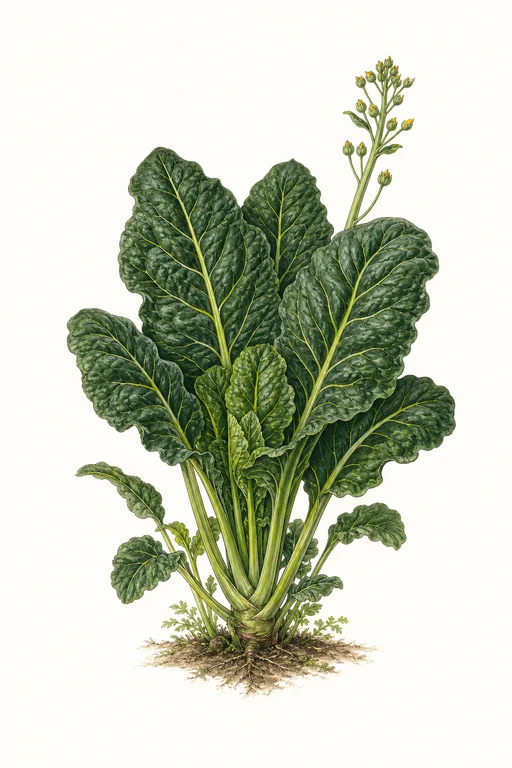
At about 55 days, this variety forms an upright, compact rosette of richly textured foliage that stays attractive and harvest-ready for repeat picking. Ideal for bold, leaf-forward dishes and hearty greens preparations, Flash Collards shines when you want flavor that’s bright, satisfying, and beautifully consistent from garden to table.
Light: Full SunMaturity: 55 DaysHabit: Rosette
Planting schedules and alerts are optimized for Columbus (Zone 6b).
Crop Dates
| Milestone | Date |
|---|---|
| Start Indoors | Mar 28th |
| Last Frost | Apr 25th |
| Transplant / Sow Outdoors | Apr 25th |
| Harvest Begins | Jun 19th |
| Harvest Ends | Oct 16th |
Crop Details
| Trait | Value |
|---|---|
| Days to Maturity | 55 |
| Sun Requirements | Full Sun |
| Growth Habit | Rosette |
| Support Needed | None |
| Planting Depth | Normal |
| Germination Temp (°F) | 45 |
| Min Soil Temp (°F) | 40 |
| Min Night Temp (°F) | 28 |
| Harden Off (days) | 6 |
Culinary Notes

Chef's Note
Flash Collards hold their structure when heat hits—so you can cook them hot and fast without turning them to sad, slippery greens. The mild sweetness makes them especially persuasive with sharp acids and smoky, salty proteins, where the leaf stays bright instead of muted.

Best Uses
- quick sauté with high-heat finish (keeps the snap)
- steam or braise just until glossy and tender
- chopped into hot skillet greens with a tangy pan sauce
- raw or lightly dressed ribbons for crunchy bite

Flavor Profile

Frequently Asked Questions
What pests or diseases commonly hit Brassica oleracea var. acephala (collards like 'Flash Collards') and what should I do?
How often should I water Brassica oleracea var. acephala during the main growing phase (around days 15–45)?
How can I tell when 'Flash Collards' are ready to harvest?
Sowing Tips

Transplant Conditions
Wait until soil reaches 40°F and nights stay above 28°F before moving outdoors. Harden off for 6 days first.
Expert Note

For fastest regrowth and tender leaves, harvest frequently and keep soil consistently moist after transplanting.