
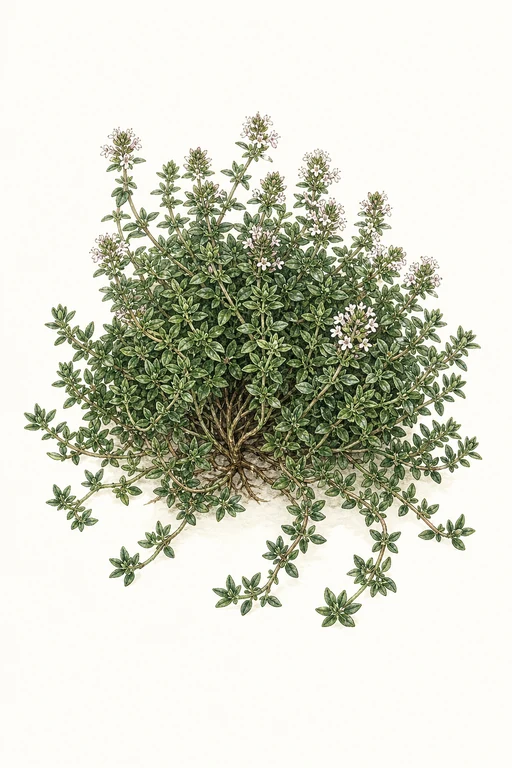
French Summer Thyme
Aromatic as a sunlit garden path, French Summer Thyme fills the air with a bright, herbal perfume and a gently peppery, wood-kissed flavor.
Its fine, narrow leaves hold a tender, springy texture that stays fragrant through the season, making it a favorite for everyday seasoning and finishing. Grow French Summer Thyme for fresh sprigs to lift sauces, soups, and roasted vegetables, or to dry and store for steady, savory character.
Light: Full SunMaturity: 60 DaysHabit: Upright
Crop Dates : 2a
| Milestone | Date |
|---|---|
| Start Indoors | May 4th |
| Last Frost | May 25th |
| Transplant / Sow Outdoors | May 25th |
| Harvest Begins | Jul 24th |
| Harvest Ends | Aug 29th |
Crop Details
| Trait | Value |
|---|---|
| Days to Maturity | 60 |
| Sun Requirements | Full Sun |
| Growth Habit | Upright |
| Support Needed | None |
| Planting Depth | Surface |
| Germination Temp (°F) | 70 |
| Min Soil Temp (°F) | 45 |
| Min Night Temp (°F) | 35 |
| Harden Off (days) | 7 |
Culinary Notes

Chef's Note
French Summer Thyme’s perfume-forward aromatics make it worth adding late—so the leaves stay springy and the flavor reads bright, not cooked-out. It plays especially well with browned fats (butter/olive oil) and starchy vegetables where its peppery, woody finish can cling without turning bitter.

Best Uses
- strip leaves into pan sauces and reductions for a last-minute aromatic lift
- roast vegetables until edges bronze, then toss with fresh thyme off-heat
- steep sprigs in stocks and soups for a clear, not-musty herb note
- dry for long storage and use in slow-cooked braises where flavor needs time to bloom

Flavor Profile

Frequently Asked Questions
What’s the most common disease problem for Thymus vulgaris (French summer thyme), and how do I prevent it?
How often should I water French summer thyme during active growth?
How can I tell when French summer thyme is ready to harvest?
Sowing Tips

Transplant Conditions
Wait until soil reaches 45°F and nights stay above 35°F before moving outdoors. Harden off for 7 days first.
Expert Note

Start thyme lightly (barely covering seed), then harden off and plant into warm, well-drained soil for best flavor and long-term survival.