
Frisee De Meaux
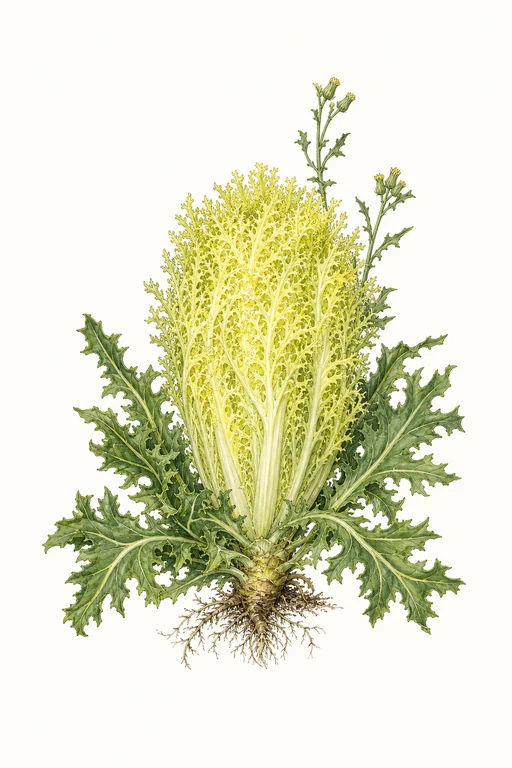
Frisee De Meaux brings a dramatic, frilly crescendo of tender leaves in a cool, pale green to creamy-yellow tone—silky at first touch, then delightfully crisp with a gentle, pleasantly bitter edge.
Ideal for gardeners who love bold texture, it forms tight, upright heads with finely cut, ruffled margins that hold their shape beautifully. Grow it for elegant fresh salads and refined endive presentations, where its frisee-like crunch shines and its flavor stays bright and distinctive.
Light: Full SunMaturity: 60 DaysHabit: Rosette
Planting schedules and alerts are optimized for Columbus (Zone 6b).
Crop Dates
| Milestone | Date |
|---|---|
| Start Indoors | Mar 28th |
| Last Frost | Apr 25th |
| Transplant / Sow Outdoors | Apr 25th |
| Harvest Begins | Jun 24th |
| Harvest Ends | Oct 16th |
Crop Details
| Trait | Value |
|---|---|
| Days to Maturity | 60 |
| Sun Requirements | Full Sun |
| Growth Habit | Rosette |
| Support Needed | None |
| Planting Depth | Normal |
| Germination Temp (°F) | 70 |
| Min Soil Temp (°F) | 40 |
| Min Night Temp (°F) | 32 |
| Harden Off (days) | 6 |
Culinary Notes

Chef's Note
Frisee De Meaux’s fine frill keeps its structure in a bowl, delivering bitter-bright crunch instead of turning limp. It’s the kind of endive that holds up to a mustard-lemon dressing and rewards you with that silky-to-crisp transition in every forkful.

Best Uses
- tossed fresh with a light emulsified vinaigrette to keep the bite snappy
- classic endive/egg preparations where bitterness plays well with richness
- served as a crisp base for warm proteins (so it stays crunchy, not soggy)
- shaved or torn into salads for texture—especially when mixed with sweeter greens

Flavor Profile

Frequently Asked Questions
What disease or pest most commonly affects Cichorium endivia (frisée) and how do I treat it?
How often should I water Cichorium endivia during the main growing phase?
How can I tell when frisée (Cichorium endivia) is ready to harvest?
Sowing Tips

Transplant Conditions
Wait until soil reaches 40°F and nights stay above 32°F before moving outdoors. Harden off for 6 days first.
Expert Note

For the most tender, less-bitter frisée, blanch by tying the outer leaves or covering plants for about 2 weeks before harvest when nights begin to cool.