
Giant Red Celery
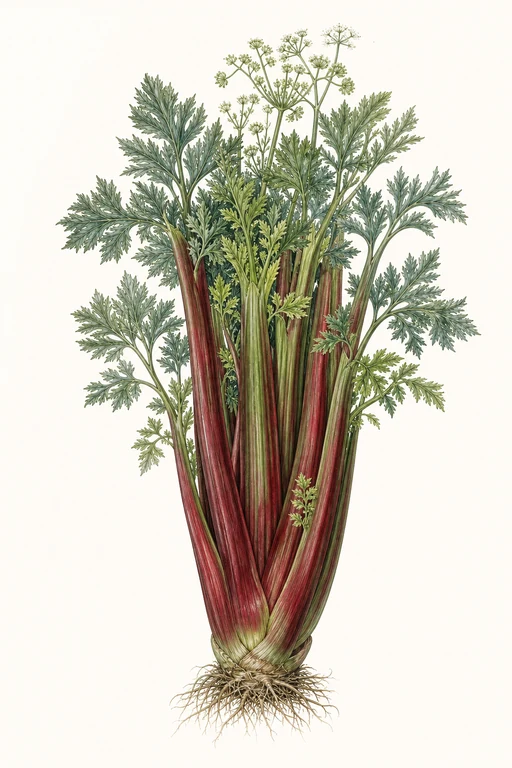
Crisp as cool riverstone, Giant Red Celery rises with bold, ruby-tinged stalks that stay tender and bright through the season.
Expect a clean, aromatic snap and a gently sweet, celery-forward flavor that shines in fresh bunches and shines again when simmered into savory preparations. Grow it for impressive garden presence and dependable harvest—ideal for gardeners who want both beauty and a standout crunch in every use.
Light: Part SunMaturity: 90 DaysHabit: Upright
Crop Dates : 2a
| Milestone | Date |
|---|---|
| Start Indoors | Mar 2nd |
| Last Frost | May 25th |
| Transplant / Sow Outdoors | Jul 6th |
| Harvest Begins | Oct 4th |
| Harvest Ends | Aug 29th |
Crop Details
| Trait | Value |
|---|---|
| Days to Maturity | 90 |
| Sun Requirements | Part Sun |
| Growth Habit | Upright |
| Support Needed | None |
| Planting Depth | Normal |
| Germination Temp (°F) | 70 |
| Min Soil Temp (°F) | 40 |
| Min Night Temp (°F) | 35 |
| Harden Off (days) | 7 |
Culinary Notes

Chef's Note
This is the celery you want when you care about the bite: tender enough to stay crisp, with a bright, herbaceous aroma that doesn’t disappear in a simmer. Use it to build soups and stocks, but also to eat raw—its sweet, cool snap survives a squeeze of lemon and a little salt like it was made for it.

Best Uses
- raw snacking sticks with salt and lemon
- mirepoix-style base for stock that stays lively and aromatic
- quick sautés where the stalks stay firm (finish with butter and pepper)
- braises or stews where you want celery’s flavor without turning to mush

Flavor Profile

Frequently Asked Questions
What’s the most common pest or disease problem on Apium graveolens (giant red celery), and how do I manage it?
How often should I water giant red celery during its main growing phase, and what soil moisture target should I keep?
How can I tell when giant red celery is ready to harvest?
Sowing Tips

Transplant Conditions
Wait until soil reaches 40°F and nights stay above 35°F before moving outdoors. Harden off for 7 days first.
Expert Note

Start celery early indoors and keep seedlings evenly moist; transplant into deeply prepared soil and avoid letting the crown dry out or it can stunt and toughen.