
Giant Winter
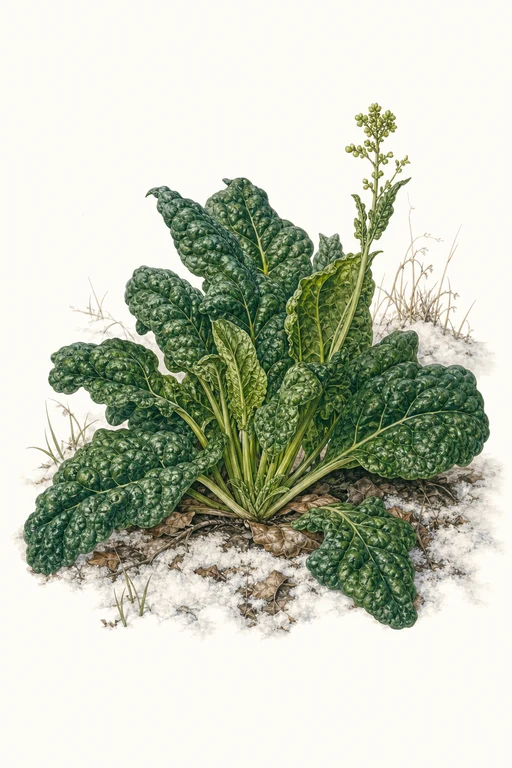
Sink your fingers into Giant Winter’s thick, savoyed leaves—crisp yet tender, with a deep, sweet-green flavor that lingers like fresh garden air.
At maturity, the rosette forms a broad, cushiony mass of heavily blistered texture, ideal for hearty, cold-season harvests and bold, leafy dishes. Grow it for reliable winter performance and a luxuriant, velvety look that turns everyday greens into a standout centerpiece.
Light: Full ShadeMaturity: 45 DaysHabit: Rosette
Crop Dates : 2a
| Milestone | Date |
|---|---|
| Start Indoors | Direct Sow |
| Last Frost | May 25th |
| Transplant / Sow Outdoors | May 25th |
| Harvest Begins | Jul 9th |
| Harvest Ends | Aug 29th |
Crop Details
| Trait | Value |
|---|---|
| Days to Maturity | 45 |
| Sun Requirements | Full Shade |
| Growth Habit | Rosette |
| Support Needed | None |
| Planting Depth | Normal |
| Germination Temp (°F) | 45 |
| Min Soil Temp (°F) | 40 |
| Min Night Temp (°F) | 30 |
| Harden Off (days) | 6 |
Culinary Notes

Chef's Note
Giant Winter’s thick, savoyed leaves hold up to heat without turning grainy, so you get tender wilt plus real leaf structure. In winter cooking it behaves like a green steak—quickly seasoned, then folded into fats and acids (butter, olive oil, lemon) so the flavor stays sweet-green instead of flat.

Best Uses
- quick-sauté with garlic and a splash of lemon to keep it bright
- creamless wilt for silky texture—spin it into olive-oil pasta
- sturdy base for winter braises and potpie-style fillings
- steam and finish with butter or browned butter for a velvety finish

Flavor Profile

Frequently Asked Questions
What pest or disease commonly affects Spinacia oleracea (giant winter spinach), and what should I do?
How often should I water giant winter spinach during its main growing phase?
How can I tell when Spinacia oleracea is ready to harvest?
Sowing Tips

Transplant Conditions
Wait until soil reaches 40°F and nights stay above 30°F before moving outdoors. Harden off for 6 days first.
Expert Note

For best leaf size and sweetness, keep plants cool and avoid heat stress—mulch lightly and water consistently.