
Gladius
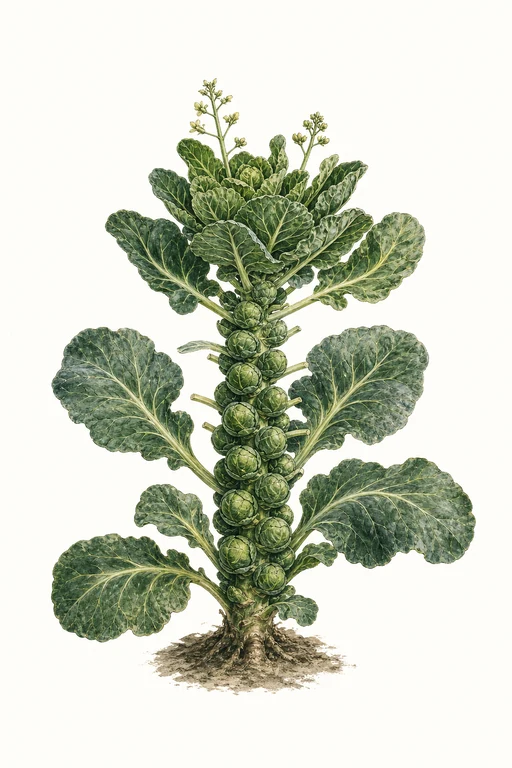
Sweetly nutty and richly green, Gladius Brussels Sprout forms dense, tightly layered crowns that feel satisfyingly crisp at harvest.
Expect a refined bite with a tender, succulent texture—ideal for roasting to deepen flavor, steaming for a clean, fresh taste, or shredding into vibrant slaws and hearty skillet-style sides. Grow Gladius for a steady harvest window and a garden-to-plate experience that rewards patience with beautifully uniform sprouts.
Light: Full SunMaturity: 90 DaysHabit: Upright
Planting schedules and alerts are optimized for Columbus (Zone 6b).
Crop Dates
| Milestone | Date |
|---|---|
| Start Indoors | Mar 28th |
| Last Frost | Apr 25th |
| Transplant / Sow Outdoors | Apr 25th |
| Harvest Begins | Jul 24th |
| Harvest Ends | Oct 16th |
Crop Details
| Trait | Value |
|---|---|
| Days to Maturity | 90 |
| Sun Requirements | Full Sun |
| Growth Habit | Upright |
| Support Needed | None |
| Planting Depth | Normal |
| Germination Temp (°F) | 45 |
| Min Soil Temp (°F) | 45 |
| Min Night Temp (°F) | 35 |
| Harden Off (days) | 6 |
Culinary Notes

Chef's Note
Gladius is built for the kind of heat that rewards patience: its tight, layered crowns roast into crisp-edged, sweet-nutty bites instead of turning watery or hollow. Use it cut-side forward—then finish with acid and salty fat (lemon or Parmesan) to sharpen the green’s flavor.

Best Uses
- high-heat roasting until deeply caramel-browned at the edges
- steaming to keep a crisp, fresh, grassy sweetness
- pan-searing to blister cut sides for a nutty, toasty surface
- shredding into slaws that hold crunch under vinaigrette

Flavor Profile

Frequently Asked Questions
What pest or disease most often affects Brassica oleracea var. gemmifera (Brussels sprout-type) like Gladius, and what should I do?
How often should I water Gladius during the main growing phase to keep Brussels sprouts-type heads forming well?
How do I tell when Gladius is ready to harvest?
Sowing Tips

Transplant Conditions
Wait until soil reaches 45°F and nights stay above 35°F before moving outdoors. Harden off for 6 days first.
Expert Note

For the tightest sprouts, keep plants evenly watered and avoid prolonged heat—brussels sprout flavor and sprout formation improve as temperatures cool.