
Golden Sweet
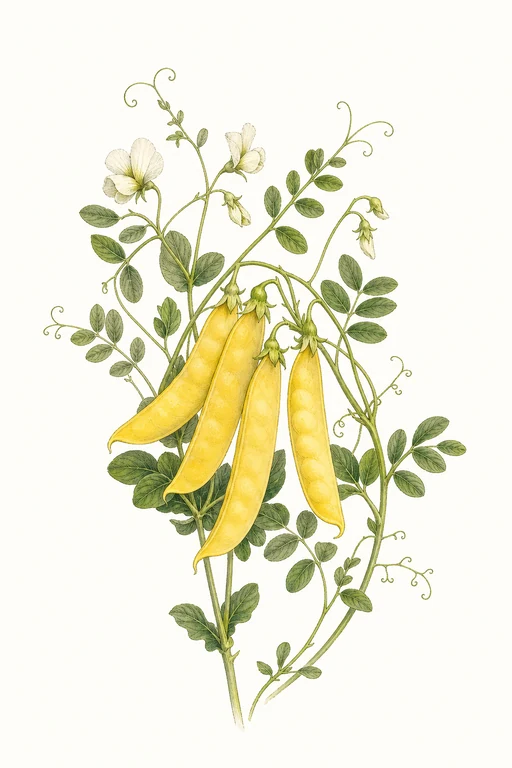
Golden Sweet snow peas unfold in luminous, sunlit pods—tender, crisp, and sweet with a delicate snap that feels like fresh spring air.
At maturity, the pods hold a warm golden glow and a smooth, edible texture that stays pleasantly crisp for garden-fresh enjoyment. Grow Golden Sweet for standout, early harvests and for vibrant, golden color in your favorite pea-forward dishes and garnishes.
Light: Full SunMaturity: 65 DaysHabit: Upright
Crop Dates : 8a
| Milestone | Date |
|---|---|
| Start Indoors | Direct Sow |
| Last Frost | Apr 1st |
| Transplant / Sow Outdoors | Apr 1st |
| Harvest Begins | Jun 5th |
| Harvest Ends | Nov 5th |
Crop Details
| Trait | Value |
|---|---|
| Days to Maturity | 65 |
| Sun Requirements | Full Sun |
| Growth Habit | Upright |
| Support Needed | Trellis |
| Planting Depth | Normal |
| Germination Temp (°F) | 45 |
| Min Soil Temp (°F) | 40 |
| Min Night Temp (°F) | 28 |
| Harden Off (days) | Not Required |
Culinary Notes

Chef's Note
Golden Sweet snow peas are built for speed: blanch briefly or hit the pan hard so the pods stay crisp and sweet instead of turning soft. Their luminous color and watery crunch make them the kind of garnish you actually taste, not just look at.

Best Uses
- quick blanch-and-shock toss with butter and lemon
- stir-fry or fast sauté for a glossy, still-crisp bite
- raw in dressed salads where they hold crunch
- garnish for color—slice lengthwise for a ribboned look

Flavor Profile

Frequently Asked Questions
What pest or disease most often affects Physalis philadelphica (Golden Sweet), and how do I manage it?
How often should I water Golden Sweet tomatillo (Physalis philadelphica) during the main growing phase?
How can I tell when Golden Sweet (Physalis philadelphica) is ready to harvest?
Sowing Tips

Transplant Conditions
Wait until soil reaches 40°F and nights stay above 28°F before moving outdoors.
Expert Note

Direct-sow snow peas as soon as soil can be worked, and keep them evenly moist to prevent stringy pods.