
Greek Columnar
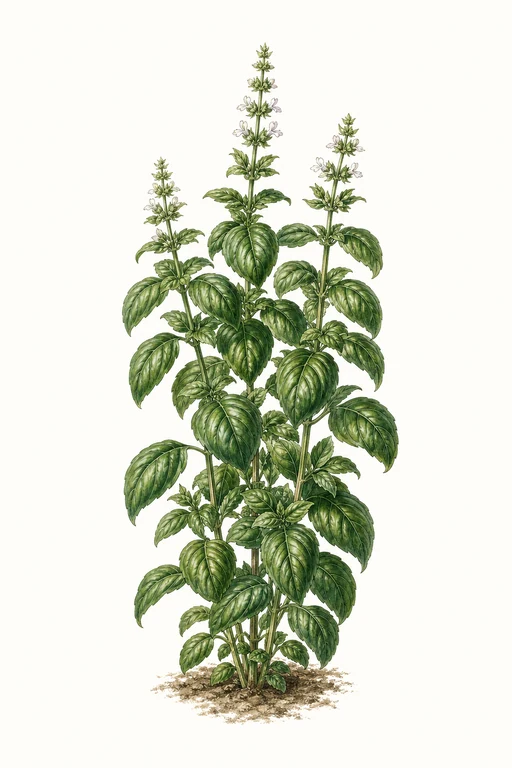
Fragrant as a sunlit herb garden, Greek Columnar basil unfolds with a steady, upright habit and richly aromatic leaves that perfume the air with classic sweet-basil charm.
The foliage is tender and velvety, with a crisp, succulent texture that holds its character beautifully in fresh applications and quick flavoring. Grow Greek Columnar for bold, clean basil notes in sauces, pesto-style blends, and bright finishing garnishes.
Light: Full SunMaturity: 60 DaysHabit: Upright
Crop Dates : 2b
| Milestone | Date |
|---|---|
| Start Indoors | Apr 3rd |
| Last Frost | May 15th |
| Transplant / Sow Outdoors | Jun 26th |
| Harvest Begins | Aug 25th |
| Harvest Ends | Aug 25th |
Crop Details
| Trait | Value |
|---|---|
| Days to Maturity | 60 |
| Sun Requirements | Full Sun |
| Growth Habit | Upright |
| Support Needed | None |
| Planting Depth | Normal |
| Germination Temp (°F) | 70 |
| Min Soil Temp (°F) | 60 |
| Min Night Temp (°F) | 50 |
| Harden Off (days) | 10 |
Culinary Notes

Chef's Note
Greek Columnar basil is built for eating at herb-volume: its upright, tender leaves chop clean and keep a crisp, succulent mouthfeel rather than collapsing into bitterness. Use it early in a quick blend or as a late finishing scatter so that sweet, floral basil stays bright instead of fading under heavy heat.

Best Uses
- wilt-and-stir quick basil sauces that stay green and fragrant
- Greek-style pesto where the leaves stay buoyant instead of turning stringy
- fresh chopping for finishing—scatter over beans, grilled fish, or warm grains right before serving
- blended into vinaigrettes or yogurt sauces for a cooling herb hit

Flavor Profile

Frequently Asked Questions
What pest or disease most commonly affects Ocimum basilicum (Greek Columnar) and how can I control it?
How often should I water Ocimum basilicum during the main growing phase?
How do I tell when Greek Columnar basil is ready to harvest?
Sowing Tips

Transplant Conditions
Wait until soil reaches 60°F and nights stay above 50°F before moving outdoors. Harden off for 10 days first.
Expert Note

For the longest leaf season, keep it cool early and avoid heat stress by transplanting into cool weather, then harvest frequently to encourage tender new growth.