
Greek Thyme
Aromatic as a sunlit hillside, Greek Thyme fills the garden with a bright, herbal perfume—cool, resinous, and distinctly lively.
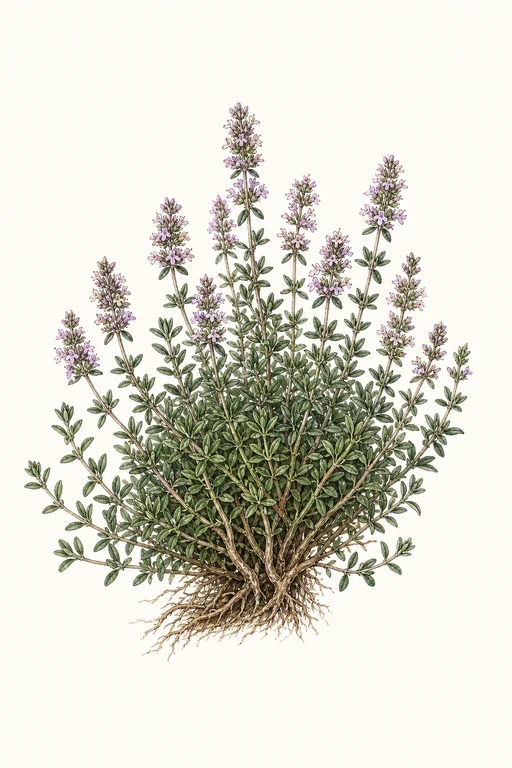
Leaves are small and velvety, forming a tidy, low mound that’s rich in flavor and ideal for drying or for building bold, fragrant profiles in everyday herb blends. Grow Greek Thyme for its dependable, fast-to-establish habit and its intensely fragrant foliage that rewards every brushing of the plant.
Light: Full SunMaturity: 60 DaysHabit: Upright
Crop Dates : 8a
| Milestone | Date |
|---|---|
| Start Indoors | Mar 4th |
| Last Frost | Apr 1st |
| Transplant / Sow Outdoors | May 27th |
| Harvest Begins | Jul 26th |
| Harvest Ends | Nov 5th |
Crop Details
| Trait | Value |
|---|---|
| Days to Maturity | 60 |
| Sun Requirements | Full Sun |
| Growth Habit | Upright |
| Support Needed | None |
| Planting Depth | Surface |
| Germination Temp (°F) | 70 |
| Min Soil Temp (°F) | 55 |
| Min Night Temp (°F) | 40 |
| Harden Off (days) | 7 |
Culinary Notes

Chef's Note
Greek Thyme brings a cooler, more resin-forward bite than milder thyme—its flavor blooms the moment heat hits it, so it works best when you cook it briefly rather than burying it for long hours. Use it like a seasoning blade: sharp enough to stand up to garlic and lemon, but mellowed by olive oil and wine reduction.

Best Uses
- rubbed into roast poultry or lamb where it perfumes the outer crust
- stirred into quick pan sauces and reduced with wine/stock for a clean, savory snap
- steeped in hot oil or vinegar as a fast infusion for dressings and marinades
- dried and crumbled into herb blends where its aroma stays punchy

Flavor Profile

Frequently Asked Questions
What pest or disease commonly affects Thymus vulgaris (Greek thyme), and how can I manage it?
How often should I water Greek thyme during its main growing phase?
How do I know when Greek thyme is ready to harvest?
Sowing Tips

Transplant Conditions
Wait until soil reaches 55°F and nights stay above 40°F before moving outdoors. Harden off for 7 days first.
Expert Note

Sow lightly (barely cover), keep evenly moist until germination, then water sparingly after establishment for the best thyme flavor.