
Groninger
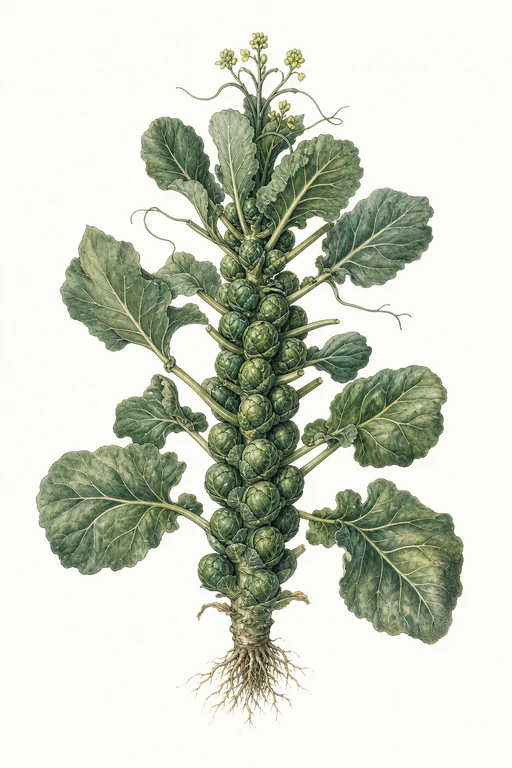
Rich, sweet-savor depth begins with Groninger’s tightly layered sprouts, where a cool, cabbage-green glow gives way to a tender, fine-grained bite.
Expect a compact, uniform head set along the stem—crisp to the touch, yet mellowing beautifully with time in cool weather. Groninger is a standout for roasting trays, hearty skillet-style meals, and velvety sauces that showcase its distinctive Brussels-sprout character.
Light: Full SunMaturity: 90 DaysHabit: Upright
Planting schedules and alerts are optimized for Columbus (Zone 6b).
Crop Dates
| Milestone | Date |
|---|---|
| Start Indoors | Mar 28th |
| Last Frost | Apr 25th |
| Transplant / Sow Outdoors | Apr 18th |
| Harvest Begins | Jul 17th |
| Harvest Ends | Oct 16th |
Crop Details
| Trait | Value |
|---|---|
| Days to Maturity | 90 |
| Sun Requirements | Full Sun |
| Growth Habit | Upright |
| Support Needed | None |
| Planting Depth | Normal |
| Germination Temp (°F) | 45 |
| Min Soil Temp (°F) | 45 |
| Min Night Temp (°F) | 32 |
| Harden Off (days) | 6 |
Culinary Notes

Chef's Note
Groninger’s tightly layered sprouts give you a crisp outer bite and a mellow, fine-grained interior—built for high-heat roasting where the sugars actually show up. Keep the seasonings sharp and fatty (butter, mustard, a hit of lemon) and you’ll get that unmistakable Brussels-sprout sweetness without turning it sulfurous.

Best Uses
- hot-roast tray application for caramelized edges and a creamy interior
- shredded or halved skillet meals where sprouts stay toothsome
- velvety purées/sauces that lean into the Brussels-sprout nuttiness
- quick-blanch-and-finish dishes with butter or browned fat

Flavor Profile

Frequently Asked Questions
What’s the most common pest or disease on Brussels sprouts (Brassica oleracea var. gemmifera), and how can I stop it?
How often should I water Brussels sprouts during the main growing phase to keep sprouts forming well?
How do I know when Brussels sprouts are ready to harvest?
Sowing Tips

Transplant Conditions
Wait until soil reaches 45°F and nights stay above 32°F before moving outdoors. Harden off for 6 days first.
Expert Note

For the sweetest sprouts, aim for steady cool weather—consistent watering and a light feeding schedule help prevent loose or bitter sprouts.