
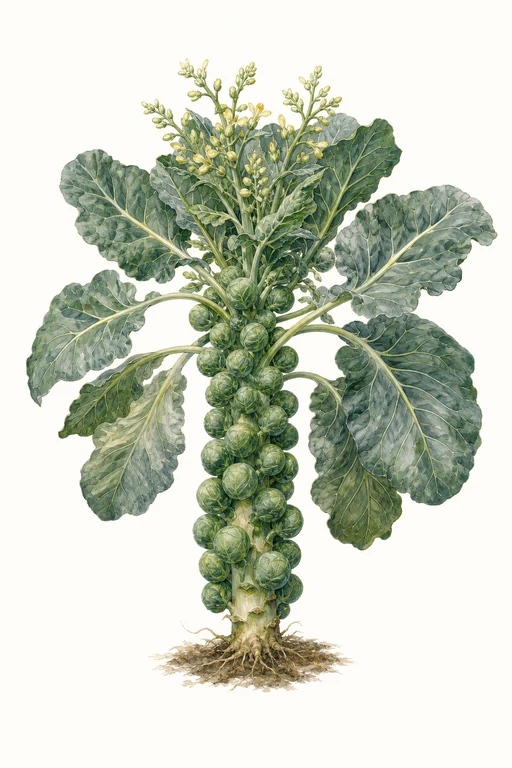
Gustus Brussels Sprout
Sweet, nutty sprouts emerge in a tidy column, their flavor turning especially rich as the weather cools—each bud forming with a dense, velvety bite.
Gustus Brussels Sprout delivers uniform, deep-green globes with a crisp-tender texture that holds beautifully for roasting, steaming, and gratin-style dishes, as well as for hearty braises and tangy pickles. Grow it for a long-season harvest that feels like a garden treasure chest from late fall onward.
Light: Full SunMaturity: 85 DaysHabit: Upright
Planting schedules and alerts are optimized for Columbus (Zone 6b).
Crop Dates
| Milestone | Date |
|---|---|
| Start Indoors | Mar 28th |
| Last Frost | Apr 25th |
| Transplant / Sow Outdoors | Apr 18th |
| Harvest Begins | Jul 12th |
| Harvest Ends | Oct 16th |
Crop Details
| Trait | Value |
|---|---|
| Days to Maturity | 85 |
| Sun Requirements | Full Sun |
| Growth Habit | Upright |
| Support Needed | None |
| Planting Depth | Normal |
| Germination Temp (°F) | 70 |
| Min Soil Temp (°F) | 45 |
| Min Night Temp (°F) | 35 |
| Harden Off (days) | 6 |
Culinary Notes

Chef's Note
Gustus is built for the cold-weather alchemy: the sprouts get sweeter and more nutty, with a dense, velvety mouthfeel that holds up to high heat. Quarter-and-roast them cut-side down to chase caramelized edges while keeping the interiors tender, not chalky.

Best Uses
- hot-pan roasting until the cut faces go deeply caramelized and the cores stay custardy
- steam-then-brown finishing for crisp-tender sprouts that don’t turn sulfurous
- shingle-grated gratin style with cream and cheese for a cohesive, browned top
- quick tangy pickling for crunch that keeps its sweetness

Flavor Profile

Frequently Asked Questions
What is the most common pest or disease on Brussels sprouts (Brassica oleracea var. gemmifera) and how do I manage it?
How often should I water Brussels sprouts during the main growing phase?
How can I tell when Brussels sprouts are ready to harvest?
Sowing Tips

Transplant Conditions
Wait until soil reaches 45°F and nights stay above 35°F before moving outdoors. Harden off for 6 days first.
Expert Note

For best sprout sweetness, aim for cool-season growth and keep plants consistently moist—sweetness improves after light fall frosts.