
Gypsy
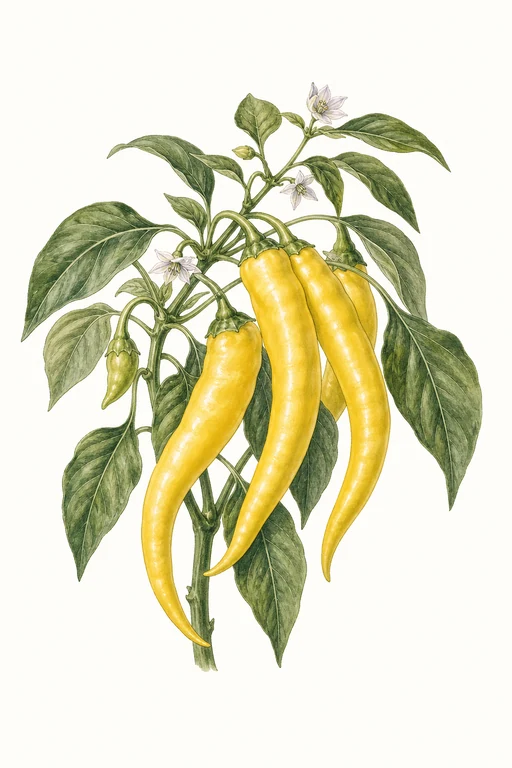
Sun-warmed and honey-sweet, Gypsy Banana Pepper ripens to a glossy, golden arc that feels silky on the tongue and finishes with a gentle, lingering tang rather than heat.
Its slender, banana-shaped pods are crisp and juicy, with a tender crunch that holds beautifully in briny preparations and bright relish-style mixes. Grow Gypsy for abundant, eye-catching fruit from midseason onward—ideal for gardeners who want a sweet pepper that still delivers that classic pepper snap.
Light: Full SunMaturity: 70 DaysHabit: Bush
Planting schedules and alerts are optimized for Columbus (Zone 6b).
Crop Dates
| Milestone | Date |
|---|---|
| Start Indoors | Mar 7th |
| Last Frost | Apr 25th |
| Transplant / Sow Outdoors | Jun 20th |
| Harvest Begins | Aug 29th |
| Harvest Ends | Oct 16th |
Crop Details
| Trait | Value |
|---|---|
| Days to Maturity | 70 |
| Sun Requirements | Full Sun |
| Growth Habit | Bush |
| Support Needed | Stake |
| Planting Depth | Normal |
| Germination Temp (°F) | 80 |
| Min Soil Temp (°F) | 60 |
| Min Night Temp (°F) | 50 |
| Harden Off (days) | 10 |
Culinary Notes

Chef's Note
Gypsy banana peppers lean sweet and glossy, so they bring that banana-pepper crunch without steamrolling the dish with heat. Use them pickled or finely chopped in brine-forward relishes—their juicy flesh stays springy and their tang wakes up salt, fat, and herbs.

Best Uses
- quick-pickled banana peppers—keeps their tender crunch
- briny relish and chopped antipasto mixes where they stay juicy
- slice-and-sauté as a sweet pepper element (short time, high heat)
- stuffing that benefits from a crisp wall and mild heat

Flavor Profile

Frequently Asked Questions
What pest or disease is most likely on Capsicum annuum (sweet/Gypsy peppers), and how can I stop it early?
How often should I water Gypsy (Capsicum annuum) during the main growing phase?
How do I tell when Gypsy peppers (Capsicum annuum) are ready to harvest?
Sowing Tips

Transplant Conditions
Wait until soil reaches 60°F and nights stay above 50°F before moving outdoors. Harden off for 10 days first.
Expert Note

Start seeds warm and transplant only once night temperatures are consistently ≥50°F to prevent cold-stunting in thin-walled, early sweet peppers.