
H-19 Little Leaf
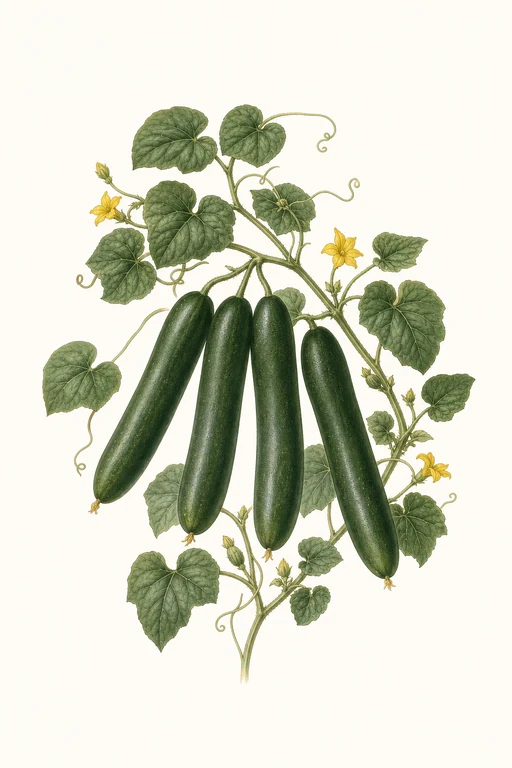
Aromatically crisp and vividly refreshing, H-19 Little Leaf Beit Alpha Cucumber delivers slender, dark-green fruit with a clean, juicy snap and a tender, never-bitter bite.
Expect a compact, well-branched plant that sets abundant cucumbers for steady harvest, with a smooth, lightly glossy skin that shines in the garden. Ideal for fresh slicing and quick pickling, these cucumbers bring bright crunch to every bowl and jar.
Light: Full SunMaturity: 52 DaysHabit: Vine
Crop Dates : 1a
| Milestone | Date |
|---|---|
| Last Frost | Jun 15th |
| Growing Approach | Protected Environment Only |
Crop Details
| Trait | Value |
|---|---|
| Days to Maturity | 52 |
| Sun Requirements | Full Sun |
| Growth Habit | Vine |
| Support Needed | Trellis |
| Planting Depth | Normal |
| Germination Temp (°F) | 75 |
| Min Soil Temp (°F) | 65 |
| Min Night Temp (°F) | 55 |
| Harden Off (days) | 10 |
Culinary Notes

Chef's Note
H-19 Little Leaf is built for the moment you bite down—juicy snap, tender bite, and zero bitterness even with quick handling. Keep it cold and sharp: lemon, vinegar, yogurt, and feta make it taste like crisp green summer instead of watery salad filler.

Best Uses
- paper-thin slicing for high-crunch salads
- quick refrigerator pickles that stay snappy
- lunchbox-style cucumber spears with salt and citrus
- tossing into cold yogurt-herb bowls

Flavor Profile

Frequently Asked Questions
Why are my Cucumis sativus (cucumber) plants developing powdery white patches on leaves, and what should I do?
How often should I water Cucumis sativus during the main growing phase (after vines start running)?
How can I tell when Cucumis sativus (H-19 Little Leaf) is ready to harvest?
Sowing Tips

Transplant Conditions
Wait until soil reaches 65°F and nights stay above 55°F before moving outdoors. Harden off for 10 days first.

Direct Sow Preferred
Sensitive roots — does not transplant well. If starting indoors, use biodegradable pots and disturb roots as little as possible when moving outdoors.
Expert Note

For mini/compact cucumbers, keep the soil consistently moist and harvest frequently (every 1–2 days) to maintain nonstop production.